
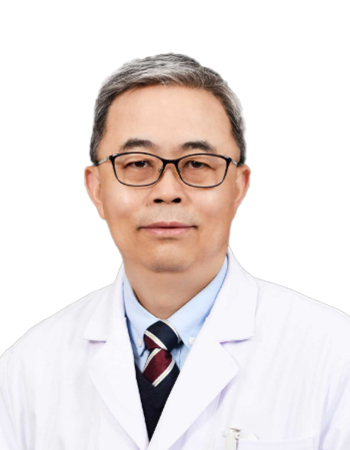
Chief Physician, Professor, Doctoral Supervisor
 Affiliated HospitalPeking Union Medical College Hospital, Chinese Academy of Medical Sciences
→
The current director of the Department of Endocrinology, director of the National Health Commission's Key Laboratory of Endocrinology, and former chairman of the Chinese Medical Association's Osteoporosis and Bone Mineral Diseases Branch, whose research areas are metabolic bone diseases and hereditary endocrine diseases; Zhu Huijuan: Chief Physician, Doctoral Supervisor, Executive Deputy Director, a key member of the discipline in the field of pituitary diseases and rare endocrine diseases; Academician Shi Yifan (deceased, founder of the discipline): a pioneer in pituitary tumors and growth hormone deficiency dwarfism in China; The team includes several professors and doctoral supervisors, covering various subspecialties of pituitary, bone metabolism, diabetes, obesity, hereditary endocrine diseases, and endocrine tumors.
Academic Highlights: Liu Shih-hao and Zhu Xian-yi named renal osteodystrophy, and their findings were published in Science; Academician Shi Yi-fan's team won the first prize of the National Science and Technology Progress Award for clinical research on pituitary tumors; established the largest clinical cohort and biobank in China for pituitary diseases, metabolic bone diseases, and hereditary endocrine diseases; led the development of dozens of Chinese guidelines/expert consensus on endocrine and metabolic diseases; published original research in top international journals such as JAMA Internal Medicine and PNAS; pioneered the establishment of a complete set of pituitary hormone detection methods and normal reference ranges for the Chinese population in China; pioneered clinical research on recombinant human growth hormone; established localized diagnosis and treatment procedures for monogenic endocrine diseases and occult endocrine tumors, and cultivated key talents in the field of endocrinology nationwide. Core Values: Accepting rare and difficult-to-diagnose endocrine and metabolic diseases with poor treatment outcomes from patients across the country; establishing diagnostic standards and treatment guidelines for endocrine diseases suitable for the Chinese population; promoting the clinical translation of endocrine molecular diagnostics and innovative drugs, and leading the development of endocrinology in China.
Professor Xiao Yi
Sleep-disordered breathing and respiratory physiology
Research Interests: Clinical and research studies on sleep-related breathing disorders, particularly obstructive sleep apnea (OSA).
Cutting-edge technology: Led the development of the "Guidelines for the Diagnosis and Treatment of Obstructive Sleep Apnea in Adults (2020)," introducing new indicators such as hypoxia load and achieving several important breakthroughs. Has long been engaged in clinical and research work on sleep-related breathing disorders, and has presided over and undertaken research projects such as the National Science and Technology Support Program of the 15th, 12th, and 13th Five-Year Plans. Has conducted in-depth research on PAP treatment strategies for heart failure complicated by sleep apnea.
Areas of expertise: Various respiratory diseases, especially sleep-disordered breathing, obstructive sleep apnea, and respiratory failure.
Academic Highlights and Core Values: Former Director, Chief Physician, Professor, and Doctoral Supervisor of the Department of Respiratory and Critical Care Medicine. Expert Member and Standing Committee Member of the Chinese Medical Association Respiratory Diseases Branch, Head of the Sleep-Disordered Breathing Group, and Vice Chairman of the Beijing Medical Association Respiratory Diseases Branch. Chief Editor of several monographs, including "Analysis and Review of Difficult Cases in Respiratory Medicine" and "Key Points and Blind Spots in Clinical Diagnosis and Treatment of Respiratory Diseases."
Professor Guan Kai
Allergen-specific immunotherapy and mRNA vaccines
Research areas: Novel immunotherapy strategies for allergic airway inflammation, mechanisms and clinical translation of allergen-specific immunotherapy.
Cutting-edge technologies: Led the development of novel allergen-specific immunotherapy strategies based on mRNA vaccine technology, and constructed a lipid nanoparticle delivery system encoding Der p 1/Der p 2. Led a multicenter retrospective study of house dust mite allergen preparations for the treatment of allergic rhinitis with multiple allergies, finding that a higher level of fungal allergy is a risk factor for lower efficacy in patients with multiple allergies.
Specializes in treating: allergic rhinitis, allergic asthma, dust mite allergy, and immunotherapy for multiple sensitizations.
Academic Highlights and Core Values: Currently serving as the Director of the Department of Allergy, Deputy Director of the National Medical Quality Control Center for Immunology (including Allergy) (under construction), and a member of the Chinese Medical Association's Allergy Branch. As the corresponding author, he has published groundbreaking findings on mRNA immunotherapy in journals such as *Molecular Therapy*, propelling allergen-specific immunotherapy from the era of crude extracts to the era of genetic engineering.
Professor Sun Jinlu
Chief Physician , Specializing in Allergic Rhinitis and Immunotherapy
Research areas: Pathogenesis and specific immunotherapy of allergic rhinitis, and clinical management of multiple sensitizations.
Cutting-edge technology: Leading young physicians to participate in the 2025 EAACI Hong Kong Allergy Academy, sharing the distribution patterns of allergens and clinical manifestations of allergic rhinitis in China. Participating in systematic reviews and meta-analyses of literature related to the efficacy and safety of immunotherapy for patients with multiple sensitization.
Specializes in treating: allergic rhinitis, allergic asthma, urticaria, angioedema, and hereditary angioedema.
Academic Highlights and Core Values: Chief Physician with extensive clinical experience in the field of specific immunotherapy for allergic rhinitis, actively participates in international academic exchanges, and promotes in-depth cooperation between Chinese allergy medicine and EAACI.
Professor Zhu Zhaohui
Deputy Director of the General Office of the Clinical Research Institute, Chief Physician of the Department of Nuclear Medicine, and Professor.
Research areas: Clinical diagnostic applications of PET/CT and related basic clinical research; radiopharmaceutical development and clinical translation.
Cutting-edge technologies: Leading the development of the innovative EB-PSMA-17 drug, extending the drug's half-life and improving tumor uptake and retention through Evans blue (EB) structural modification. Leading the completion of a nationwide multicenter clinical trial (11 tertiary hospitals, 409 clinical trial participants) of the "world's first" radioactive drug Technetium-Tc Pexiretide Glycopeptide Injection. Conducting clinical research on Ga-FAPI-RGD PET/CT diagnosis and 177Lu-FAPI-RGD radioligand therapy for metastatic tumors.
Areas of expertise: 177Lu-PSMA radioligand therapy for prostate cancer, PET/CT tumor diagnosis, and clinical evaluation of new radiopharmaceuticals.
Academic Highlights and Core Values: Deputy Director of the General Office of the Clinical Research Institute, Chief Physician of the Department of Nuclear Medicine, and Professor. He spearheaded a groundbreaking original breakthrough in my country's radiopharmaceutical field, marking a significant step forward for China in the international forefront of innovative radiopharmaceutical research and development.
Professor Lin Yansong
Deputy Director of Nuclear Medicine Department, Chief Physician, Professor, Postdoctoral Supervisor
Research areas: Comprehensive treatment and full-course management of thyroid cancer; treatment and molecular evolution mechanism of hypodifferentiated and undifferentiated thyroid carcinoma; integration of novel molecular probes with tumor diagnosis and treatment.
Cutting-edge technology: Pioneered internationally in applying RGD-type molecular probes reflecting tumor angiogenesis to localize iodine-refractory thyroid cancer; led domestic clinical trials of the proprietary targeted drugs apatinib and donafenib for the treatment of iodine-refractory thyroid cancer, demonstrating their efficacy. Served as the China coordinator for the IAEA RAS074 project.
Areas of expertise: Postoperative ¹³¹I treatment for differentiated thyroid cancer, diagnosis and treatment of iodine-refractory thyroid cancer, and Graves radionuclide therapy for hyperthyroidism.
Academic Highlights and Core Values: Chairman of the Thyroid Cancer Committee of the Chinese Society of Clinical Oncology (CSCO), and Chairman of the Thyroid Disease Committee of the China International Exchange and Promotion Association for Medical and Health Care. He holds a leading position nationwide in the field of radionuclide diagnosis and treatment of thyroid cancer, and promotes the international sharing of radionuclide diagnosis and treatment technologies.
Professor Luo Yaping
Assistant Director of Nuclear Medicine Department, Chief Physician, Doctoral Supervisor
Research areas: Nuclear medicine imaging diagnosis, especially PET/CT, and molecular imaging diagnosis of rare tumors and endocrine tumors.
Cutting-edge technologies: We have created an official WeChat account, "Peking Union Medical College Hospital Nuclear Medicine," to promote the popularization and exchange of knowledge about nuclear medicine imaging diagnosis. We are conducting research on the application of the novel Ga-DOTA-CCK-FS imaging technology for the diagnosis of medullary thyroid carcinoma and other rare tumors.
Areas of expertise: PET/CT diagnosis of tumors, nuclear medicine imaging of nervous system diseases, and molecular imaging diagnosis of rare tumors.
Academic Highlights and Core Values: Vice Chairman of the Youth Committee of the Nuclear Medicine Branch of the Beijing Medical Association. Published one SCI article as first/corresponding author.
Professor Liao Quan – Specializing in Robotic and Laparoscopic Cosmetic Thyroid Surgery
Research areas: Clinical diagnosis and treatment and basic research on pancreatic, thyroid and parathyroid diseases.
Cutting-edge technology: Specializing in cosmetic (scarless neck) laparoscopic and robotic surgical treatment of thyroid and parathyroid tumors, with procedures performed via axillary and transareolar approaches. Also proficient in minimally invasive robotic surgery for pancreatic and gastric tumors. Participated in the development of the "Chinese Expert Consensus on Laparoscopic and Robotic Parathyroid Surgery (2024 Edition)" and the "Expert Consensus on Postoperative Hypoparathyroidism Management."
Specializes in treating: thyroid tumors, parathyroid tumors, pancreatic tumors, and gastric tumors.
Academic Highlights and Core Values: Executive Deputy Director of the Department of Surgery, Deputy Director of General Surgery, Chief Physician, Professor, Doctoral Supervisor, and Distinguished Professor of Peking Union Medical College. Deputy Head of the Thyroid and Metabolism Group of the Chinese Medical Association's Surgical Branch, Chairman of the Parathyroid and Bone Metabolism Professional Committee of the Chinese Research Hospital Association, Standing Committee Member of the Surgical Branch of the Chinese Medical Doctor Association, and Deputy Editor-in-Chief of the Chinese Journal of Endocrine Surgery. Recipient of numerous awards, including two second-class National Science and Technology Progress Awards and one first-class and one second-class Chinese Medical Science and Technology Award.
Professor Liu Yuewu
Chief Physician of General Surgery, Professor, and Master's Supervisor.
Research areas: Thyroid surgery and gastrointestinal and splenic surgery.
Cutting-edge technology: Pioneered endoscopic thyroid surgery via the subclavian approach and selective lymph node dissection for thyroid cancer in China. Familiar with domestic and international thyroid cancer surgical guidelines and has given numerous academic presentations in China. Extensive surgical experience, performing approximately 500 thyroid surgeries annually, with no complaints of accidental recurrent laryngeal nerve injury to date.
Areas of expertise: Diagnosis and treatment of thyroid diseases, especially thyroid cancer, thyroid nodules, hyperthyroidism, and nodular goiter.
Academic Highlights and Core Values: Member of the American Thyroid Association (ATA), Vice Chairman of the Thyroid Professional Committee of the China Non-Public Medical Institutions Association, and Member of the Thyroid Professional Committee of the Chinese Anti-Cancer Association. Has undertaken multiple research projects on the thyroid, including studies on the relationship between female hormones and the occurrence and development of thyroid cancer, and the impact and mechanism of BRAF gene mutations on the malignancy of thyroid cancer. Received the "Professor Qiu Fazhu Outstanding Paper Award" and the "Professor Zhu Yu Outstanding Paper Award" (both as first author), and won the second prize of the National Science and Technology Progress Award in 2003.