

Medical Care in China

Thoracic

It covers diseases of the lungs, esophagus, mediastinum, and chest wall, and integrates minimally invasive thoracoscopic, robotic, and complex thoracic surgical treatment capabilities.

Get a Care Plan and Cost Estimate
Diagnosis and treatment of lung diseasescover lung cancer, pulmonary nodules, pneumothorax and pulmonary bullae, etc.
Minimally invasive thoracic surgerySome patients can be evaluated for thoracoscopic and robotic surgery.
Esophageal disease treatmentcovers esophageal cancer and complex esophageal diseases.
Complex Thoracic ManagementFocus on Pleural Infections, Postoperative Complications, and Chest Wall Deformities.

Diagnostic Range

Discover the treatment pathway that's right for you

Select a category to see information on care plans, matching hospitals, specialists, and more.

Spontaneous pneumothorax

Disease Introduction Spontaneous pneumothorax is more common in tall, thin young men. It is caused by the rupture of a congenitally weak bulla at the apex of the lung, allowing air to leak into the pleural cavity. Symptoms often include sudden onset of unilateral chest pain, chest tightness, and shortness of breath. In cases with small amounts of air and mild lung compression, observation or puncture aspiration may be sufficient. Recurrent, persistent, or hemopneumothorax cases often require thoracoscopic

lung cancer

Disease Introduction Lung cancer is a malignant tumor with the highest incidence and mortality rate in my country. Early stages are often asymptomatic and are detected through low-dose spiral CT screening. After diagnosis, treatment is selected based on stage and gene type: for operable patients, minimally invasive surgical resection is performed combined with perioperative immunotherapy and targeted therapy; for inoperable or advanced-stage patients, targeted drugs, immunotherapy, and stereotactic radiot

pulmonary nodules

Disease Introduction Pulmonary nodules are round or oval shadows with a diameter of no more than 3 cm found on a CT scan during a physical examination. More than 90% of them are benign, and most do not require immediate surgery. The standard practice is to first assess the risk of benignity or malignancy using thin-section CT combined with AI-assisted interpretation, and then follow up and observe them in layers according to the size and nature of the nodule (solid, ground-glass opacity). Only those that

COPD

Disease Introduction COPD is a common, preventable, and treatable chronic airway disease, mainly characterized by persistent cough, sputum production, and shortness of breath on exertion, with progressively worsening airflow limitation. It is commonly seen in long-term smokers or those exposed to dust. The treatment goals are to alleviate symptoms, reduce acute exacerbations, and slow the decline in lung function. Methods include smoking cessation, inhaled medications, pulmonary rehabilitation, oxygen the

Empyema

Disease Introduction Empyema is an infectious disease in which bacteria invade the pleural cavity, forming purulent exudate that accumulates. It often occurs secondary to pneumonia, chest surgery, or trauma, and manifests as fever, chest pain, shortness of breath, and weight loss. Based on the course of the disease, it is divided into the exudative stage, the fibrinous-purulent stage, and the organizing stage. The core of treatment is to drain the pus as early and adequately as possible and control the in

thymic carcinoma

Disease Introduction Thymic carcinoma is a rare mediastinal tumor originating from thymic epithelial cells and significantly more malignant than thymoma. It commonly occurs in the anterior superior mediastinum. Early stages may be asymptomatic, but as it progresses, symptoms include chest pain, shortness of breath, superior vena cava syndrome, or distant metastases. Treatment primarily involves extensive surgical resection, followed by radiotherapy based on staging. For advanced, unresectable, or recurren

Mediastinal tumor

Disease Introduction Mediastinal tumors are masses located in the mediastinal space between the lungs and behind the sternum. Common types include thymomas and teratomas in the anterior mediastinum, and neurogenic tumors such as schwannomas in the posterior mediastinum. Most are discovered incidentally during routine CT scans. Some patients experience chest tightness, chest pain, and cough. Those with thymomas may also experience difficulty lifting their eyelids and weakness in their limbs. Treatment prim

Chest wall tumor

Disease Introduction Chest wall tumors are masses that grow on the bones and soft tissues of the chest wall, including primary bone tumors of the ribs and sternum (most commonly chondrosarcoma) and soft tissue sarcomas, as well as metastatic lesions that have invaded from the lungs, breasts, etc. In the early stages, they often present as a gradually enlarging chest wall mass, which may be accompanied by dull pain or no pain. The core of treatment is to extensively resect the tumor along with the affected

pulmonary fibrosis

Disease Introduction Pulmonary fibrosis (most typically idiopathic pulmonary fibrosis) is a chronic disease in which the lungs gradually harden and thicken, much like scarring on the skin. Symptoms include increasingly severe shortness of breath after exertion and a persistent dry cough. It is a progressive and potentially fatal interstitial lung disease. While irreversible, it can be managed: early use of anti-fibrotic drugs can slow the decline in lung function, and long-term oxygen therapy and pulmonar

Leading Specialists

Trusted Expertise Across Leading Specialties

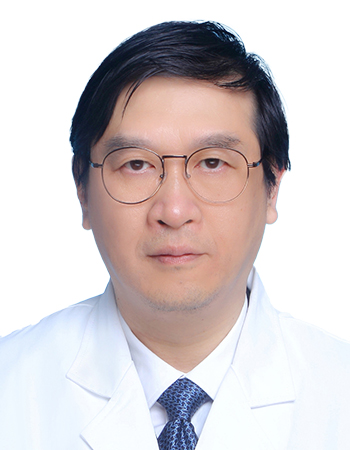
Zhou Qinghua

Professor, Doctoral Supervisor

Thoracic

- Research areas: Surgery for locally advanced lung cancer, molecular subtyping of lung cancer, early screening and metastasis mechanisms of lung cancer; personalized multidisciplinary comprehensive treatment of lung cancer; thoracic tumor reconstructive surgery; molecular mechanisms of lung cancer invasion and metastasis. - Core technologies: Thoracic tumor reconstruction surgery, extended resection of locally advanced lung cancer invading major blood vessels; founder of "Thoracic Tumor Reconstruction Su

West China Hospital of Sichuan University logo Affiliated Hospital West China Hospital of Sichuan University
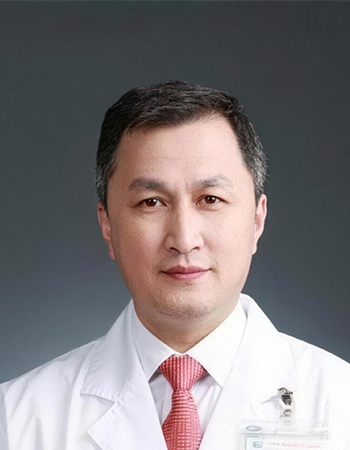
Zhu Yuming

Chief Physician, Professor, Doctoral Supervisor, Head of the Lung Tumor Surgery Subspecialty

Thoracic

-Research areas : Minimally invasive lung cancer surgery, precision surgery for pulmonary nodules; - Specialized techniques: Single-port thoracoscopic segmentectomy/lobectomy, sleeve resection; - Areas of expertise: Early-stage lung cancer, multiple pulmonary nodules, central lung cancer; - Academic Highlights & Core Values: A core expert in promoting single-port thoracoscopic surgery in China, leading a multi-center clinical study on minimally invasive surgery for early-stage lung cancer in China, and fo

Shanghai Pulmonary Hospital (Shanghai Pulmonary Hospital Affiliated to Tongji University) logo Affiliated Hospital Shanghai Pulmonary Hospital (Shanghai Pulmonary Hospital Affiliated to Tongji University)
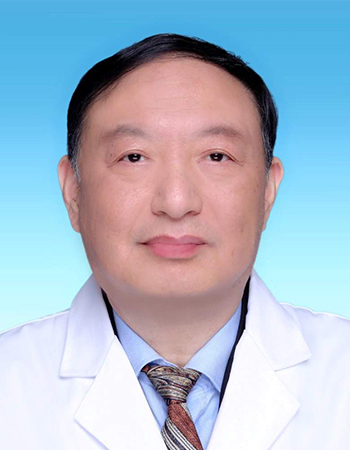
Xie Dong

Chief Physician, Professor, and a key expert in lung transplantation at the Department of Thoracic Surgery, Shanghai Pulmonary Hospital.

Thoracic

Research areas : Lung transplantation for end-stage lung diseases (interstitial pneumonia, idiopathic pulmonary fibrosis, COPD, pulmonary hypertension, pulmonary lymphangioleiomyomatosis, etc.), and minimally invasive treatment of pulmonary nodules and early-stage lung cancer. Cutting-edge technology: Extensive experience in lung transplantation for end-stage lung diseases such as severe emphysema, pulmonary fibrosis, and bronchiectasis; skilled in complex or difficult thoracic surgeries and surgical trea

Shanghai Pulmonary Hospital (Shanghai Pulmonary Hospital Affiliated to Tongji University) logo Affiliated Hospital Shanghai Pulmonary Hospital (Shanghai Pulmonary Hospital Affiliated to Tongji University)
Chen Haiquan

Doctor of Medicine, Chief Physician, Level 2 Dr., and Doctoral Supervisor. Currently serves as Director of the Thoracic Tumor Institute of Fudan University

ThoracicOncology

Chief Expert of the Multidisciplinary Diagnosis and Treatment Group for Thoracic Tumors, Director of the Lung Cancer Prevention and Treatment Center, and Director of the Department of Thoracic Surgery and ICU at Fudan University Cancer Hospital. Formerly served as President of Shanghai Chest Hospital. Received his Doctor of Thoracic and Cardiovascular Surgery degree from Shanghai Medical University in 1992. From 1997 to 1999, worked at St. Vicente Medical Center in Portland, USA, receiving comprehensive t

Fudan University Cancer Hospital logo Affiliated Hospital Fudan University Cancer Hospital
Jiang Gening

Chief Physician, Dr., Doctoral Supervisor , Chief Expert, Academic Leader, and Director of the Department of Thoracic Surgery at Shanghai Pulmonary Hospital

Thoracic

Deputy Director of the Department of Surgery, Tongji University School of Medicine; Fellow of the Royal College of Surgeons (FRCS); Member of the American Association of Thoracic and Cardiovascular Surgeons (AATS). Standing Committee Member and Head of the Lung Cancer Group of the Chinese Society of Thoracic and Cardiovascular Surgery; First and Second Chairman of the Shanghai Medical Association Thoracic Surgery Branch. Recipient of the State Council Special Allowance and the Shanghai May 1st Labor Medal

Shanghai Pulmonary Hospital (Shanghai Pulmonary Hospital Affiliated to Tongji University) logo Affiliated Hospital Shanghai Pulmonary Hospital (Shanghai Pulmonary Hospital Affiliated to Tongji University)

Patient Stories

See the Next Step Through Patient Journeys

Congenital esophageal atresia (Gross type III) - Building a CASE 01
PATIENT JOURNEY

Congenital esophageal atresia (Gross type III) - Building a "new bridge" for the "blocked" lifeline

ThoracicPediatrics

Patient records: Name: Anong Age: 1 day Nationality: Thailand Diagnosis: Congenital esophageal atresia (Gross type III) Treatment Hospital: Beijing Children's Hospital (National Children's Medical Center), Capital Medical University Our esophagus, which was "disconnected" at birth, was reconnected across continents within 72 hours. When Anon was born in a Bangkok hospital, the midwife noticed a terrible sign: large amounts of foam were constantly coming out of his mouth, and he couldn't swallow. When they

View case details →
Traumatic Chest Deformity Complicated by Chronic Empyema Following a Severe Car Accident - A New CASE 02
PATIENT JOURNEY

Traumatic Chest Deformity Complicated by Chronic Empyema Following a Severe Car Accident - A New "Armor"

Thoracic

Patient records Name: Ahmed Al-Rashid Age: 45 Nationality: United Arab Emirates (Dubai) Diagnosis: Traumatic chest deformity complicated by chronic empyema following a severe car accident (defect of large segments of the left 4th-8th ribs, fibrous lamination, and cardiac displacement). Treatment Hospital: West China Hospital of Sichuan University (Department of Thoracic Surgery) Ahmed posted a photo on his social media, looking ramrod straight in a tailored suit he had custom-made for his wedding, with th

View case details →
Severe subglottic tracheal stenosis after endotracheal intubation - the moment the singing resumed. CASE 03
PATIENT JOURNEY

Severe subglottic tracheal stenosis after endotracheal intubation - the moment the singing resumed.

Thoracic

Patient records Name: Maria Siregar Age: 34 Nationality: Indonesia (Jakarta) Diagnosis: Severe subglottic tracheal stenosis after endotracheal intubation (the stenotic segment is about 2.5 cm long, with an inner diameter of about 3 mm at the narrowest point, accompanied by cartilage ring destruction). Treatment Hospital: Shanghai Pulmonary Hospital (Endoscopy Center/Thoracic Surgery Department) When Maria sang "Jasmine Flower" in a slightly hoarse yet incredibly beautiful voice on the other end of the vid

View case details →

Frequently Asked Questions

Thoracic FAQs

Learn about clinical review, record preparation and arrangements for care in China.

Talk to Our Care Team →
Is surgery always necessary after a lung nodule is discovered?

Not necessarily; it needs to be determined based on imaging characteristics and changes.

Can lung cancer be treated with minimally invasive surgery?

Some early-stage patients who are suitable for surgery can be evaluated for minimally invasive treatment.

Can pulmonary bullae be treated?

Patients with symptoms or at high risk of developing pneumothorax should undergo professional evaluation.

Can spontaneous pneumothorax be surgically treated?

Thoracoscopic surgery can be evaluated if it occurs repeatedly or if the relevant surgical criteria are met.

Can esophageal cancer be treated surgically?

Some patients may be assessed for surgery based on the stage and their physical condition.

Can achalasia be treated?

Treatment options include endoscopy or surgery, depending on the condition.

Can complicated pleural infections be treated?

Treatment options include drainage, antibiotics, and necessary surgery, depending on the severity of the infection.

What should I do if anastomotic leakage occurs after thoracic surgery?

A timely specialist evaluation is necessary, and interventional, endoscopic, or surgical treatment may be required.

Can I submit a lung CT scan remotely for evaluation?

Yes.

Can I schedule a remote follow-up appointment after treatment?

Yes, follow-up appointments can be scheduled according to the treatment plan.