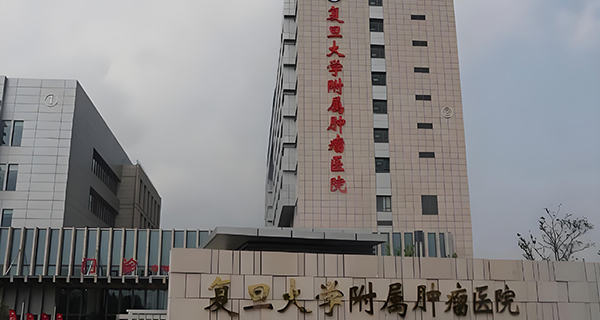

Fudan University Cancer Hospital ✓ Certified partner hospital

Shanghai · Partner Hospital

Fudan University Cancer Hospital

The hospital is a budget management unit of the National Health Commission and a directly affiliated hospital of Fudan University. It is striving to become a National Cancer Medical Center and is a key unit in the construction of National Regional Cancer Medical Centers and a unit in the National Project for Improving the Diagnosis and Treatment Capacity of Difficult and Complex Diseases. In the national performance monitoring of tertiary public hospitals, it has consistently ranked among the highest-level (A-grade) cancer hospitals nationwide. In the Fudan University version of the China Hospital Specialty Reputation Ranking, its pathology department has ranked first in the country for many consecutive years, and its oncology department has consistently ranked among the top in the country. The hospital is a National Civilized Unit and a pilot unit for high-quality development guidance of public hospitals in Shanghai.

Oncology
Request Hospital Matching

Hospital Introduction

1. Historical Origins and Spiritual Inheritance

Founded on March 1, 1931, Fudan University Cancer Hospital, formerly known as the Sino-Belgian Radium Therapy Institute, is one of the earliest established tertiary-level Class A cancer hospitals in China, integrating medical treatment, teaching, research, and prevention. It is also a pioneer in radiotherapy and pathology in China, as well as in medical oncology and surgical oncology. Adhering to the spirit of ethical medical practice and mutual assistance, the hospital started with a single 0.978-gram radium ingot at its inception and has grown into a nationally renowned team for cancer diagnosis and treatment over nearly a century. The hospital has two campuses, Xuhui and Pudong, and is highly integrated and developing together with the Shanghai Proton and Heavy Ion Hospital. It has been approved to build the Fujian Hospital, a national regional cancer medical center, and is cooperating with the Xiamen Municipal Government to jointly build the Xiamen Hospital and with the Minhang District Government to jointly build the Minhang Branch Hospital, striving to create a new pattern of one hospital with multiple campuses and homogeneous development.

2. Overall Scale and Hardware Capabilities

As of the end of 2025, the Xuhui and Pudong campuses had 2,177 beds in operation, 50 clinical and medical technology departments of various levels, and 3,120 employees. The hospital possesses 22 high-end medical devices, including the da Vinci surgical robot, magnetic resonance accelerator, TOMO, PET-CT, PET-MR, and a 5.0T MRI, ensuring the implementation of advanced diagnostic and treatment technologies. As the world's third and China's only clinical medical research and development institution simultaneously possessing photon, proton, and heavy ion technologies, the hospital holds a leading position globally in particle radiotherapy equipment.

3. National Ranking and Authoritative Certification

The hospital is a budget management unit of the National Health Commission and a directly affiliated hospital of Fudan University. It is striving to become a National Cancer Medical Center and is a key unit in the construction of National Regional Cancer Medical Centers and a unit in the National Project for Improving the Diagnosis and Treatment Capacity of Difficult and Complex Diseases. In the national performance monitoring of tertiary public hospitals, it has consistently ranked among the highest-level (A-grade) cancer hospitals nationwide. In the Fudan University version of the China Hospital Specialty Reputation Ranking, its pathology department has ranked first in the country for many consecutive years, and its oncology department has consistently ranked among the top in the country. The hospital is a National Civilized Unit and a pilot unit for high-quality development guidance of public hospitals in Shanghai.

4. Core Business Data

In 2025, the hospital will see 2.5 million outpatient visits, 170,000 inpatient admissions, 80,000 surgeries, and 420,000 radiotherapy treatments. The overall 5-year survival rate for malignant tumor patients in the hospital is as high as 72%, leading the country and comparable to the level of developed countries. Proton and heavy ion radiotherapy has been used to treat more than 7,800 patients, with an average annual growth rate of 17.5%.

5. MDT Multidisciplinary Collaboration System

As one of the earliest oncology hospitals in China to implement a physical multidisciplinary comprehensive treatment model, the hospital took the lead in breaking away from the departmental triage pattern in 2008, and instead set up eight specialized clinics based on tumor location, promoting physical MDT outpatient clinics and wards. The hospital has established nearly 40 disease-centered multidisciplinary treatment teams, and opened several specialized multidisciplinary clinics for pancreatic tumors, nasal skull base tumors, gynecological tumors, etc. In 2026, it established the first minimally invasive tumor treatment center in China, providing patients with comprehensive diagnosis and treatment services for single diseases through a closed-loop minimally invasive technology, interdisciplinary integration, and full-process patient management.

6. International and Foreign-Related Medical Treatment System

The hospital, benchmarked against MD Anderson Cancer Center and Memorial Sloan Kettering Cancer Center in the United States, is an internationally renowned cancer treatment center. Through its comprehensive multidisciplinary treatment system and precision medicine, the hospital attracts a large number of overseas patients. Ovarian cancer patients from countries such as Pakistan travel specifically to China to receive treatment using Chinese protocols. The hospital's multidisciplinary teams, including gynecologic oncology, liver surgery, colorectal surgery, and nuclear medicine, collaborate to develop individualized treatment plans for international patients, continuously enhancing its international influence.

Key Departments

Explore the Clinical Focus and Capabilities of This Hospital's Key Departments

Select a department to view its full profile.

Department Profile

Oncology Rehabilitation

Fudan University Cancer Hospital does not have a separate "Department of Oncology Rehabilitation". Oncology rehabilitation functions are primarily handled by the Department of Comprehensive Treatment (the first palliative care and hospice specialty in a tertiary hospital in China). Leveraging the hospital's position as a national center for clinical research on malignant tumors, an integrated rehabilitation system covering the entire cycle of prevention, screening, diagnosis, treatment, and rehabilitation has been established. The department uses symptom management and palliative support as its clinical foundation, psychosocial support prescriptions as its distinctive feature, and the development of expert consensus on integrated oncology rehabilitation as its academic guide. It is positioned as a source of national integrated oncology rehabilitation system construction and a center for exporting "Shanghai experience". The hospital's 5-year overall survival rate for hospitalized patients with malignant tumors reached 72.0% from 2015 to 2019, ranking among the leading levels in the country.


Historical Origins and Spiritual Inheritance:


Established in March 2006, the Department of Comprehensive Treatment draws upon the experience of palliative care and rehabilitation at MD Anderson Cancer Center in the United States. It is the first palliative support and hospice care specialty in China and the only one in Shanghai's top-tier tertiary hospitals. Professor Cheng Wenwu, the department leader, went to MD Anderson in 2004 to specialize in palliative and rehabilitation medicine for cancer. After returning to China, he founded the department, making it the first top-tier tertiary hospital in the country to establish this specialty at that time. The department practices a "whole-person-whole-family-whole-process" service model, and its related work and promotion are among the best in the country. The hospital has a strong patient organization in the field of tumor rehabilitation: in 2003, Professor Shen Zhenzhou founded the first breast cancer patient rehabilitation salon in the country, "Yan Kang Salon", which has now grown to 90,000 members.


Core business operational efficiency:


The Department of General Treatment has 25 beds, 9 doctors, 16 nurses, and 1 medical social worker. It serves an average of over 5,000 outpatients and over 800 inpatients annually, and provides end-of-life care services to over 50 terminally ill patients. Since 2013, the hospital has operated the "Help Me" psychological counseling hotline, serving thousands of patients to date. The project won the 2024 Huaxia Medical Science and Technology Award for Medical Popularization. The hospital's colorectal cancer comprehensive diagnosis and treatment team provides outpatient services in genetic counseling, ostomy care, and rehabilitation salons for patients with long-term recovery, offering comprehensive, continuous, and standardized management for patients with ostomies after colorectal cancer surgery.


Discipline Positioning and Benchmarking:


It is the National Clinical Research Center for Malignant Tumors and the National Key Clinical Specialty Affiliated Unit. In August 2024, led by Gu Wenying, Deputy Secretary of the Party Committee of the hospital, experts from Shanghai, Beijing, Jiangsu, Zhejiang, Guangdong and other provinces and cities formed the first national "Expert Consensus on Integrated Tumor Rehabilitation Management (2024)" (Draft for Solicitation of Opinions), and at the same time, 12 integrated rehabilitation practice projects for single tumor diseases were reviewed and approved. The hospital, in collaboration with Shanghai Trust, launched the "Empowering Good Doctors" program to empower cancer rehabilitation promoters. This program brought together over 150 experts to offer 160 online courses, with over 750 participants and 66 completing offline practical training. The goal is to establish a tiered, integrated cancer rehabilitation management system encompassing tertiary cancer hospitals, rehabilitation hospitals, community health service centers, communities, and families. Based on a holistic perspective on cancer patient rehabilitation, Gu Wenying proposed the concept of "cancer rehabilitation promoters," constructing a comprehensive rehabilitation talent training system covering the entire chain of prevention, screening, diagnosis, treatment, and rehabilitation.

Next Step

Is this hospital right for you?

Submit diagnosis, treatment history, and goals; hospitals and specialists recommend a formal case assessment.

Contact our service team