
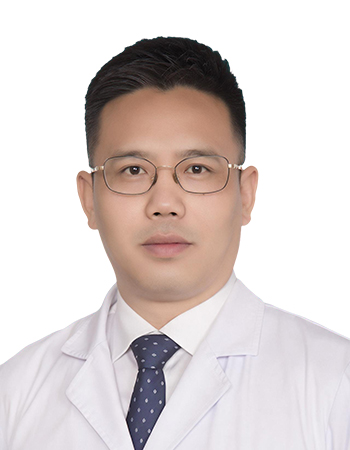
Associate Chief Physician
 Affiliated HospitalChina Rehabilitation Research Center (Beijing Bo'ai Hospital)
→
Research areas : sports injuries, minimally invasive arthroscopic surgery of the shoulder and knee; Cutting-edge technology: arthroscopic minimally invasive repair combined with functional rehabilitation for sports injuries; Areas of expertise: meniscus tears, cruciate ligament ruptures, rotator cuff tears, chronic musculoskeletal pain; Academic highlights: expert in the intersection of sports medicine and rehabilitation; Core value: establishing rehabilitation programs for returning to life and sports after minimally invasive repair of sports injuries.
Fu Guang
Chief Physician
Research areas : neurourology, urodynamics, minimally invasive urological surgery; cutting-edge technologies: minimally invasive cystoscopic treatment, conservative rehabilitation programs for neurogenic bladder;
Areas of expertise: Neurogenic bladder, prostate diseases, urinary tract stones; Academic highlights: Core expert in the promotion of urodynamics in China; Core value: Establishing a tiered screening system for conservative treatment and surgical procedures for neurogenic bladder.
Wu Juan
Chief Physician, Doctoral Supervisor
Research areas : urodynamic assessment of neurogenic bladder, pelvic floor rehabilitation; Cutting-edge technology: standardized quality control of imaging urodynamics; Areas of expertise: stroke, post-traumatic brain injury neurogenic bladder, female pelvic floor dysfunction; Academic highlights: Lead author of the "Guidelines for the Management and Rehabilitation of the Urinary System in Patients with Spinal Cord Injury"; Core value: Improving the classification and assessment system for neurogenic bladder and promoting basic-level neurourological rehabilitation techniques.
Liu Lixu
Professor , Director of the VIP Center for Neurorehabilitation, specializing in precision neuromodulation and brain-computer interfaces.
Research areas: Diagnosis and treatment of cerebrovascular diseases and complex neurological diseases, and their rehabilitation; clinical application and translation of new neurorehabilitation technologies such as transcranial magnetic stimulation under precise positioning, brain-computer interface technology, and exoskeleton robots.
Cutting-edge technologies: Has led multiple research projects, including National Science and Technology Major Support Projects, National Natural Science Foundation of China projects, Capital Medical Development Fund projects, and Ministry of Finance projects. Develops various new neurorehabilitation technologies such as rTMS under precise positioning, brain-computer interface technology, and exoskeleton robots to improve limb and speech functions in patients with acquired brain injury, actively promoting scientific research innovation and clinical translational applications in neurorehabilitation.
Areas of expertise: Diagnosis, treatment, and rehabilitation of cerebrovascular diseases and complex neurological disorders.
Academic Highlights and Core Values: Chief Physician, Professor, Doctoral Supervisor, Director of the Department of Neurology, Chairman of the Rehabilitation Quality Control Center of Fengtai District, Beijing, Vice President of the Rehabilitation Physicians Branch of the Chinese Medical Doctor Association, and Secretary-General of the Rehabilitation Committee for Postgraduate Medical Education of the Chinese Medical Doctor Association. As the head of the core unit for rehabilitation medicine education at Capital Medical University, he is responsible for the standardized training of undergraduates, postgraduates, and resident physicians, and has participated in the compilation of multiple rehabilitation medicine books, textbooks, and expert consensus documents.