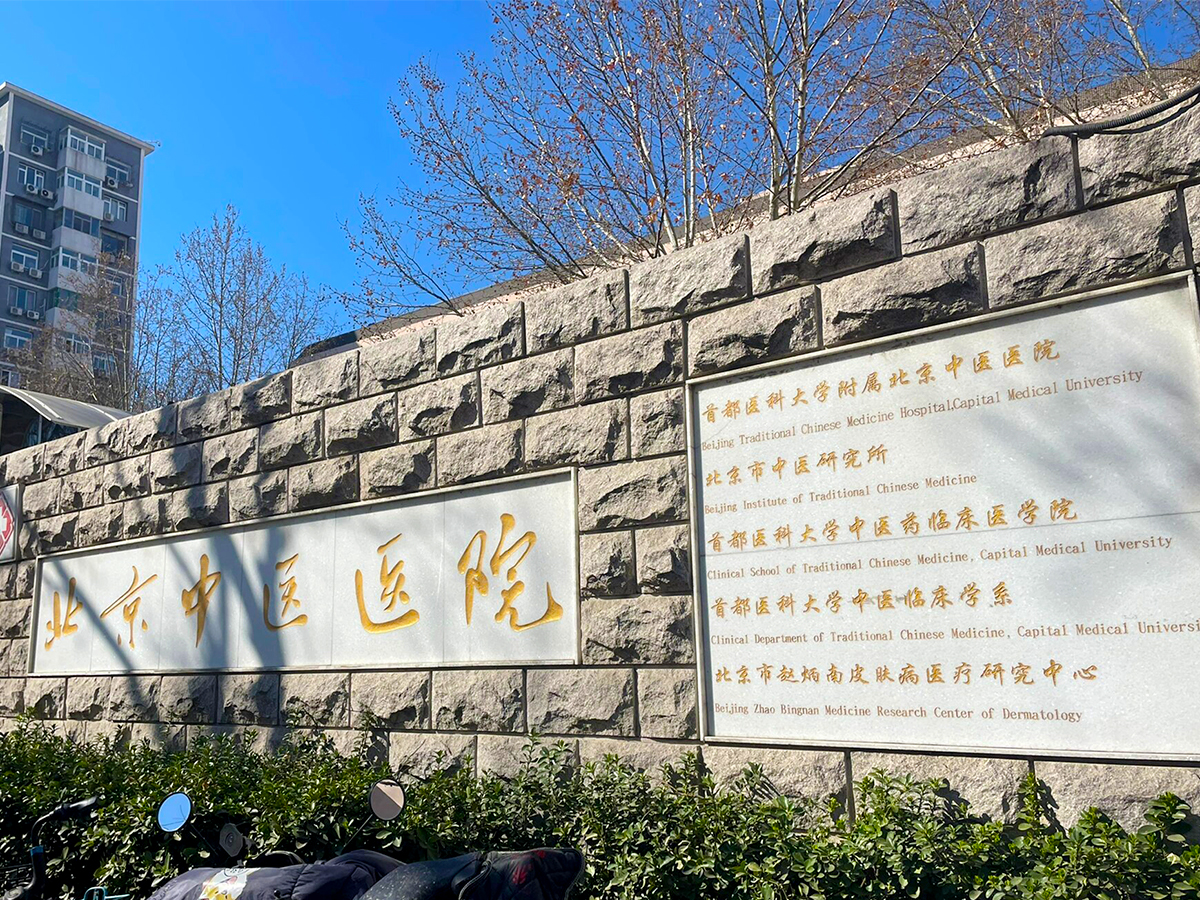
Beijing Hospital of Traditional Chinese Medicine (Clinical Medical College of Traditional Chinese Medicine), Capital Medical University ✓ Certified partner hospital

Beijing · Partner Hospital

Beijing Hospital of Traditional Chinese Medicine (Clinical Medical College of Traditional Chinese Medicine), Capital Medical University

The hospital is a national center for the development of traditional Chinese medicine, a national clinical research base for traditional Chinese medicine, and a national center for the inheritance and innovation of traditional Chinese medicine. It has key disciplines of the State Administration of Traditional Chinese Medicine, key medical specialties of the Beijing Municipal Hospital Management Center's "Sailing" Plan, as well as 13 national advantageous specialties of traditional Chinese medicine and 16 key specialties of the Beijing Municipal Administration of Traditional Chinese Medicine. It is a base for international cooperation in traditional Chinese medicine, a base for disease prevention and treatment, and a clinical base for emergency treatment of traditional Chinese medicine. It is also a Class A designated medical institution for Beijing's basic medical insurance.

TCM & Acupuncture
Request Hospital Matching

Hospital Introduction

1. Historical Origins and Spiritual Inheritance

Founded in 1956, Beijing Hospital of Traditional Chinese Medicine, affiliated with Capital Medical University, is the only municipal-level comprehensive, modern, tertiary-level Grade A TCM hospital in Beijing. It undertakes medical treatment, teaching, research, and prevention of TCM diseases in Beijing, and serves as the Clinical Medical College of TCM under Capital Medical University and a teaching hospital of Beijing University of Traditional Chinese Medicine. The hospital includes the Beijing Institute of Traditional Chinese Medicine, the Beijing International Exchange and Training Center for Traditional Chinese Medicine, and the Beijing Zhao Bingnan Dermatology Research Center, among other institutions. It is a national TCM medical center construction unit, a national regional medical center export unit, a national TCM clinical research base construction unit, and a national TCM inheritance and innovation center construction unit.

2. Overall Scale and Hardware Capabilities

The hospital currently has 1,745 employees, including 3 National Masters of Traditional Chinese Medicine, 5 National Renowned TCM Doctors, 1 Yangtze River Scholar, 2 Qihuang Scholars, 5 Young Qihuang Scholars, and 35 Capital National Masters of Traditional Chinese Medicine. It has 1,400 authorized beds, 175 TCM specialty outpatient clinics, and offers 158 TCM diagnostic and treatment programs. It is equipped with 57 types of large-scale medical equipment. The TCM pharmacy regularly stocks nearly 680 kinds of prepared Chinese medicinal herbs and has 184 kinds of hospital-prepared medicines, including 168 kinds of Chinese herbal medicines. The hospital has 2 national-level research platforms, 13 provincial/ministerial-level research platforms, and 8 bureau-level research platforms.

3. National Ranking and Authoritative Certification

The hospital is a national center for the development of traditional Chinese medicine, a national clinical research base for traditional Chinese medicine, and a national center for the inheritance and innovation of traditional Chinese medicine. It has key disciplines of the State Administration of Traditional Chinese Medicine, key medical specialties of the Beijing Municipal Hospital Management Center's "Sailing" Plan, as well as 13 national advantageous specialties of traditional Chinese medicine and 16 key specialties of the Beijing Municipal Administration of Traditional Chinese Medicine. It is a base for international cooperation in traditional Chinese medicine, a base for disease prevention and treatment, and a clinical base for emergency treatment of traditional Chinese medicine. It is also a Class A designated medical institution for Beijing's basic medical insurance.

4. Core Business Data

The hospital sees approximately 2.2 million outpatient and emergency visits annually, and its annual inpatient volume ranks among the top municipal TCM hospitals in Beijing. It has more than 77 TCM diagnosis and treatment technology projects, and its clinical specialties include dermatology, gastrointestinal diseases, and cardiovascular diseases. It has 8 national key clinical specialties and 4 North China regional treatment centers.

5. MDT Multidisciplinary Collaboration System

The hospital relies on the construction of the National Center for Traditional Chinese Medicine and carries out comprehensive TCM diagnosis and treatment for its advantageous diseases such as skin diseases, spleen and stomach diseases, and cardiovascular diseases. It has established multiple clinical centers in Beijing and formed a multidisciplinary collaborative model of TCM that integrates prevention, treatment and rehabilitation through TCM specialty clinics and traditional one-person prescriptions and small-pot decoction services.

6. International and Foreign-Related Medical Treatment System

The hospital houses the Beijing International Exchange and Training Center for Traditional Chinese Medicine, which serves as an international cooperation base for traditional Chinese medicine. It undertakes international exchange tasks such as international acupuncture training and serves Sichuan, Qinghai, Xinjiang, Ningxia, Inner Mongolia, Yunnan and other regions through its cooperative medical institutions. It has a wide influence in the overseas dissemination and international exchange of traditional Chinese medicine.

Key Departments

Explore the Clinical Focus and Capabilities of This Hospital's Key Departments

Department Profile

Traditional Chinese Medicine (TCM)

Beijing Hospital of Traditional Chinese Medicine, affiliated with Capital Medical University, is the only municipal-level comprehensive, modern, tertiary-level Grade A TCM hospital in Beijing. Founded in 1956, it is a national center for TCM medical research, a national regional medical center, a national clinical research base for TCM, and a national center for the inheritance and innovation of TCM. It is also the location of the School of Clinical Medicine of TCM of Capital Medical University. With renowned Beijing physicians such as Zhao Bingnan, Guan Youbo, and He Puren as its academic foundation, the hospital has formed a national key discipline cluster with acupuncture, TCM dermatology, TCM gastroenterology, TCM cardiology, and TCM oncology as its pillars. It is positioned as a core highland for the inheritance and innovation of TCM in Beijing and an important source of TCM clinical research nationwide.

Historical Origins and Spiritual Inheritance:

Founded in 1956, the hospital initially gathered renowned doctors from various schools of medicine in Beijing and North China, including Zhao Bingnan, Nieji Feng, and Wang Leting (known for his golden needle technique), forming a number of well-known specialties such as dermatology, pediatrics, and acupuncture. In the 1960s, it further attracted a group of experts dedicated to inheriting and developing traditional Chinese medicine, injecting new vitality into the development of its specialties. The hospital boasts 3 National Masters of Traditional Chinese Medicine, 5 National Renowned Traditional Chinese Medicine Doctors, 35 National Masters of Traditional Chinese Medicine in Beijing, 2 Qihuang Scholars, and 5 Young Qihuang Scholars. Mr. Zhao Bingnan founded the dermatology department in 1956; Guan Youbo is a master of liver diseases; He Puren is a National Master of Traditional Chinese Medicine and a representative inheritor of the fire needle technique; Wang Leting is famous for his "golden needle" technique; and Wei Beihai and Li Qiangou are renowned experts in spleen and stomach diseases—the academic lineage continues to this day.

Core business operational efficiency:

The hospital currently has 1,745 employees and 175 outpatient clinics specializing in Traditional Chinese Medicine (TCM), offering 158 TCM treatment programs. The TCM pharmacy stocks nearly 680 kinds of prepared Chinese herbs and 184 kinds of hospital-prepared medicines (168 of which are TCM preparations), including nearly 20 dosage forms such as pills, powders, pastes, granules, and capsules, with over 70 being commonly used clinical preparations. The inpatient decoction room maintains the traditional method of individualized prescriptions and small-pot decoction. The hospital boasts one State Administration of Traditional Chinese Medicine High-Level Key Discipline in TCM, eight State Administration of Traditional Chinese Medicine Key Disciplines, 13 National Advantageous Specialties in TCM, and 16 Beijing Municipal Administration of Traditional Chinese Medicine Key Specialties.

Discipline Positioning and Benchmarking:

It is a national center for the development of traditional Chinese medicine (one of the few in the country), a national center for the inheritance and innovation of traditional Chinese medicine, and a national clinical research base for traditional Chinese medicine. During the 14th Five-Year Plan period, it has been approved for 340 research projects, including "Systematic Research on the Diagnosis and Treatment Patterns of Membranous Nephropathy with Traditional Chinese Medicine" which was led by the National Key Research and Development Program "Modernization of Traditional Chinese Medicine", and "Research on Innovative Programs and Mechanisms for the Intervention of Traditional Chinese Medicine in Symptoms of Malignant Tumors" which was led by the National Science and Technology Major Project "Four Major Chronic Diseases". It has won 3 provincial and ministerial-level or above scientific research awards, signed 6 technology transfer contracts, and the amount of technology transfer reached 36.06 million yuan.
Next Step

Is this hospital right for you?

Submit diagnosis, treatment history, and goals; hospitals and specialists recommend a formal case assessment.

Contact our service team