Traditional Chinese Medicine (TCM)
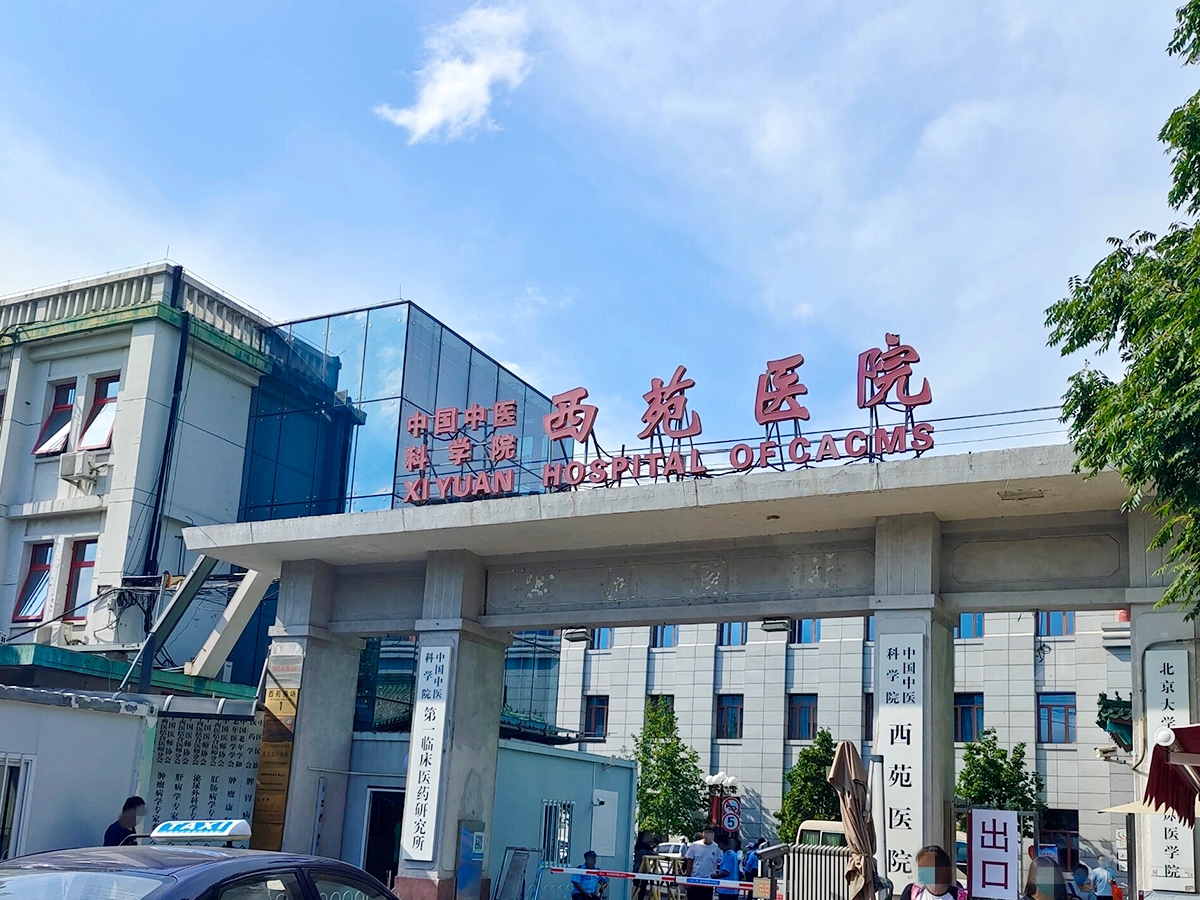
This is one of the earliest established TCM cardiovascular specialties in China, a national TCM cardiovascular clinical research center, and a national key clinical specialty. Centered on the theories of blood stasis syndrome, promoting blood circulation and removing blood stasis, three-way flow and two-way tonification, and blood stasis and toxins, it practices "Western medicine not lagging behind, TCM with distinctive characteristics," constructing an integrated TCM and Western medicine system for the prevention, diagnosis, treatment, and rehabilitation of cardiovascular diseases. It benchmarks itself against the Cleveland Clinic in the United States and the Department of Cardiology at Shanghai Shuguang Hospital, and is a leading institution in China in the intervention of blood stasis and toxins syndrome after coronary stent/bypass surgery, the treatment of chronic heart failure with invigorating qi, promoting blood circulation, and diuresis, the TCM and Western medicine treatment of dual-heart diseases, and the evidence-based evaluation of blood stasis syndrome. The Department of Cardiology at Xiyuan Hospital of the China Academy of Chinese Medical Sciences was established in 1960 and is one of the earliest TCM and TCM-Western medicine cardiovascular specialties in my country. The department is a National Key Clinical Specialty and a Key Discipline/Specialty of Cardiovascular Diseases in Traditional Chinese Medicine under the State Administration of Traditional Chinese Medicine. In 2019, it was approved as one of the first National Clinical Research Centers for Traditional Chinese Medicine (National Clinical Research Center for Cardiovascular Diseases in Traditional Chinese Medicine), with the Cardiovascular Disease Center as its main body. The center director is Academician Chen Keji, a master of traditional Chinese medicine. The department takes "blood stasis syndrome and blood-activating and stasis-removing research" as its landmark academic foundation, takes the integrated prevention and treatment of coronary heart disease with traditional Chinese and Western medicine as its flagship advantage, and takes chronic heart failure, hypertension, and atherosclerosis as a complete disease matrix, positioning itself as the highest academic high ground for the clinical and research of cardiovascular diseases in traditional Chinese medicine in China. The Department of Cardiovascular Medicine at the China Academy of Chinese Medical Sciences has ranked first for three consecutive years. It is the only TCM/integrated TCM and Western medicine hospital to be selected as one of the top 50 hospitals in China's Cardiovascular Disease Science and Technology Influence Ranking (47th overall, 1st among TCM/integrated TCM and Western medicine hospitals).
Historical Origins and Spiritual Inheritance :
The discipline was pioneered by Academician Chen Keji and the late renowned traditional Chinese medicine practitioner Guo Shikui, and has been continuously developed by four generations over more than half a century. In the late 1950s, Academician Chen Keji was the first to advocate for treating coronary heart disease with blood-activating and stasis-removing methods as the main approach. Based on the observation of over a thousand cases, he took the lead in conducting the first randomized, double-blind, placebo-controlled clinical study on the prevention and treatment of coronary heart disease in the field of traditional Chinese medicine (1982), pioneering evidence-based medical research in traditional Chinese medicine. In 2003, the research on "Blood Stasis Syndrome and Blood-Activating and Stasis-Removing Methods" won the first prize of the National Science and Technology Progress Award, the first such award in the field of traditional Chinese medicine since the founding of the People's Republic of China. Academician Chen Keji has received numerous honors, including the Einstein World Science Prize, the Ho Leung Ho Lee Science and Technology Progress Award, and the Wu Jieping Medical Award. He has mentored more than 150 doctoral, master's, and postdoctoral students.
Core business operational efficiency :
The center comprises a cardiovascular intensive care unit, general wards, an interventional center, a specialist outpatient clinic, a general outpatient clinic, a tertiary key laboratory, a cardiac function laboratory, an electrocardiogram laboratory, a cardiopulmonary function laboratory, and a cardiovascular laboratory. It currently has one academician, one national master of traditional Chinese medicine, and seven doctoral supervisors. Over 80% of its physicians hold doctoral degrees. In 2014, it was awarded the title of National Advanced Collective of Professional and Technical Personnel. The center has undertaken numerous national-level major projects, including the Sixth to Twelfth Five-Year Plans for Science and Technology Research and Support, the National 973 Program, and the National Key Research and Development Program. It has published over 700 academic papers, including over 120 SCI-indexed papers, and received over 20 national and provincial/ministerial-level awards.
Discipline Positioning and Benchmarking :
It is the National Clinical Research Center for Cardiovascular Diseases of Traditional Chinese Medicine (approved in 2019, one of the first batch of National Clinical Research Centers for Cardiovascular Diseases of Traditional Chinese Medicine), a National Key Clinical Specialty, a Key Discipline/Specialty of Cardiovascular Diseases of Traditional Chinese Medicine of the State Administration of Traditional Chinese Medicine, a Key Research Laboratory for Coronary Artery Disease with Blood Stasis and Blood Activation, and a National Clinical Pharmacology Experimental Base. The center has 30 branch centers in provincial hospitals nationwide, radiating to over 200 primary healthcare units across the country; it has been approved as a Key Laboratory for Clinical Research and Evaluation of Traditional Chinese Medicine by the National Medical Products Administration and the first demonstration construction unit for research-oriented wards of traditional Chinese medicine in Beijing. In 2026, it spearheaded the establishment of the National Alliance of Advantageous Specialties of Traditional Chinese Medicine (Cardiovascular Medicine), uniting 60 alliance member units to promote the "systematic and collaborative development" of the prevention and treatment of cardiovascular diseases with traditional Chinese medicine. In terms of international benchmarking, the center's "International Standards for Diagnostic of Blood Stasis Syndrome" has been widely recognized, and it has established cooperative relationships with institutions such as UCLA, Harvard Heart Center, Cleveland Clinic, and the University of Vienna.