
 ✓ Certified partner hospital
Beijing · Partner Hospital
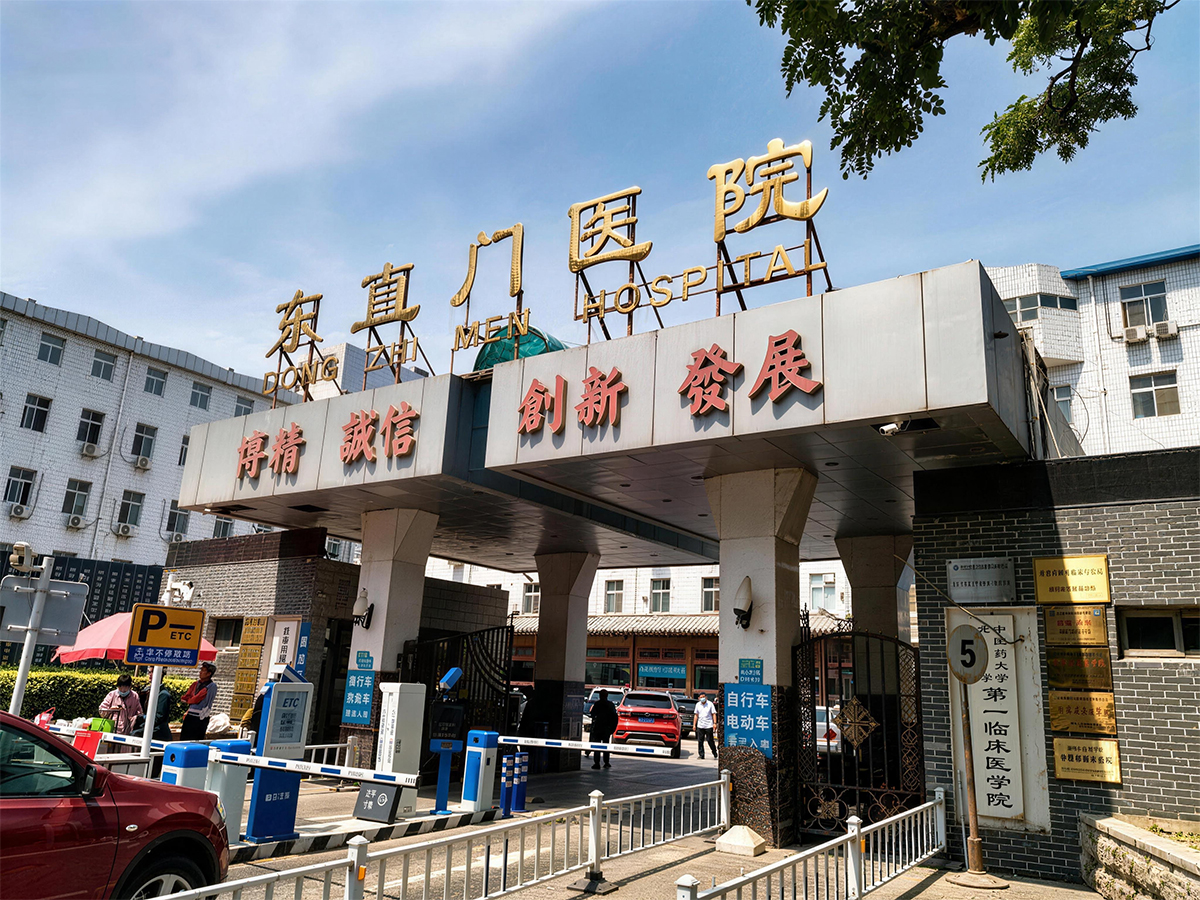
Dongzhimen Hospital of Beijing University of Chinese Medicine (The First Affiliated Hospital of Beijing University of Chinese Medicine )
The hospital was among the first batch of national medical centers (TCM guidance category) and is a demonstration base for the construction of a national comprehensive reform pilot zone for the development of TCM. It ranks 4th nationwide in the Fudan University ranking of comprehensive TCM (brain diseases). The hospital's Department of Brain Diseases is the leading unit of the National Collaborative Group for Emergency Brain Diseases under the State Administration of Traditional Chinese Medicine, and a key discipline and specialty construction unit for TCM brain diseases.
Hospital Introduction
1. Historical Origins and Spiritual Inheritance
Founded in 1958, Dongzhimen Hospital of Beijing University of Chinese Medicine is the first clinical medical college of Beijing University of Chinese Medicine, a national "211 Project" and "985 Project Advantage Discipline Innovation Platform" university, and a national "Double First-Class" university. It is among the first batch of large-scale comprehensive tertiary-level Class A TCM hospitals and a national model TCM hospital. The hospital was the first in its discipline to produce two academicians of the Chinese Academy of Engineering, Dong Jianhua and Wang Yongyan, making it a top-tier affiliated hospital of a prestigious university in the field of TCM. The hospital was also a pioneer in TCM internationally, establishing a branch in Kötzting, Germany, and was among the first institutions to offer doctoral programs in TCM.
2. Overall Scale and Hardware Capabilities
The hospital comprises a main campus in Haiyuncang, Dongcheng District, Beijing, and a branch campus in Tongzhou District, with an international department forming a "two-campus-one-department" structure. The main campus is located at No. 5 Haiyuncang, Dongcheng District, Beijing, covering an area of approximately 49,490 square meters. The hospital is among the first batch of national TCM clinical research bases and national drug clinical trial institutions, a WHO training base for appropriate TCM technologies, and a national-level experimental teaching demonstration center for TCM. The hospital has established an integrated treatment system encompassing emergency greenways, specialized wards, and a neuro-intensive care unit (NICU). Its brain disease center and stroke center are equipped with advanced facilities and possess strong treatment capabilities.
3. National Ranking and Authoritative Certification
The hospital was among the first batch of national medical centers (TCM guidance category) and is a demonstration base for the construction of a national comprehensive reform pilot zone for the development of TCM. It ranks 4th nationwide in the Fudan University ranking of comprehensive TCM (brain diseases). The hospital's Department of Brain Diseases is the leading unit of the National Collaborative Group for Emergency Brain Diseases under the State Administration of Traditional Chinese Medicine, and a key discipline and specialty construction unit for TCM brain diseases.
4. Core Business Data
The hospital ranks among the top TCM hospitals in China in terms of annual outpatient and emergency visits and inpatient discharges. It offers large-scale specialized services in neurology, respiratory medicine, endocrinology, emergency medicine, and orthopedics. The Neurology Center serves hundreds of thousands of patients annually in the diagnosis and treatment of neurological diseases such as stroke, dementia, vertigo, and headaches, and undertakes numerous national-level scientific research and talent training tasks.
5. MDT Multidisciplinary Collaboration System
The hospital has established an integrated multidisciplinary treatment system encompassing "emergency green channels, specialized wards, and neurocritical care" for stroke and other critical and severe brain diseases. The Brain Disease Center collaborates with neurosurgery, imaging, rehabilitation, and emergency medicine departments to provide integrated traditional Chinese and Western medicine treatment for stroke. With a core system of traditional Chinese medicine for brain disease diagnosis and treatment, the hospital integrates modern neurology, neuroimaging, and neurocritical care techniques, forming a multidisciplinary collaborative model that emphasizes both traditional Chinese and Western medicine.
6. International and Foreign-Related Medical Treatment System
The hospital's International Department, established in 2013, covers an area of approximately 13,409 square meters. Positioned as "International, Chinese Studies, and Traditional Chinese Medicine," and guided by the medical philosophy of "Following the Way of Nature and Practicing Virtue Throughout the World," it leverages the hospital's comprehensive strength and expert resources to provide high-end TCM medical services to patients both domestically and internationally. The hospital has also established a branch in Kötzting, Germany, making it one of the first TCM hospitals to expand internationally, and it has long been engaged in TCM education, medical cooperation, and patient services overseas..
Next Step
Is this hospital right for you?
Submit diagnosis, treatment history, and goals; hospitals and specialists recommend a formal case assessment.