
The First Affiliated Hospital of Xinjiang Medical University ✓ Certified partner hospital

Urumqi · Partner Hospital

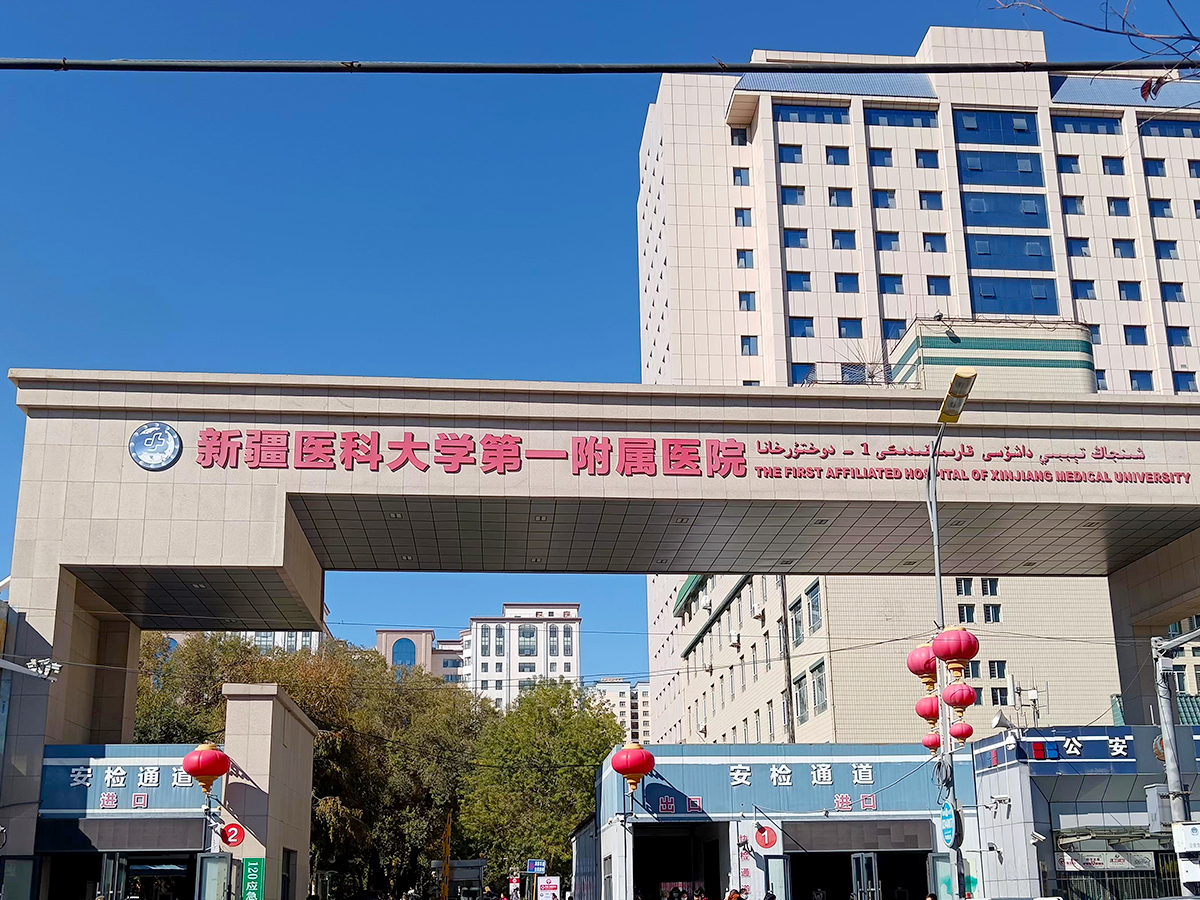
The First Affiliated Hospital of Xinjiang Medical University

The hospital is a national Grade III Class A comprehensive hospital and the First Clinical Medical College of Xinjiang Medical University. It consistently ranks first in the Northwest region of the Fudan University China Hospital Rankings. Its departments of echinococcosis surgery, cardiovascular medicine, orthopedics, and respiratory medicine have significant national influence. The hospital is a global leader in the prevention and treatment of echinococcosis (hydatid cancer) and autologous liver transplantation. It is the head unit of the National Echinococcosis Supervision Expert Group, has established Xinjiang's first brain-computer interface ward, and is a core unit in the construction of the National Regional Medical Center.

Rare & Complex Diseases
Request Hospital Matching

Hospital Introduction

1. Historical Origins and Spiritual Inheritance

The First Affiliated Hospital of Xinjiang Medical University (First Clinical Medical College) was founded in 1954 and officially established in 1956. It was one of the 156 key construction projects aided by the Soviet Union during China's First Five-Year Plan. Originally named the Affiliated Hospital of Xinjiang Medical College, the hospital has always adhered to the principles of building a hospital through culture, governing the hospital according to law, developing the hospital through science and education, and strengthening the hospital through talent, as well as the hospital motto of benevolence, integrity, excellence, and perfection. It practices the principle of serving the health of all ethnic groups. After seventy years of development, it has become a large-scale comprehensive tertiary-level Class A hospital integrating medical treatment, teaching, scientific research, prevention, and management, and is a flagship of medical teaching and research in Xinjiang.

2. Overall Scale and Hardware Capabilities

The hospital is the largest and most comprehensive tertiary-level Class A hospital in Xinjiang, with a large number of beds and dozens of clinical and medical technology departments. In 2014, it was designated as one of the first national standardized residency training bases, and in 2015, it was designated as one of the first national standardized residency training demonstration bases. It is also the affiliated unit of the Xinjiang Uygur Autonomous Region Clinical Laboratory Center and the Autonomous Region Clinical Laboratory Quality Control Center. The hospital is equipped with advanced diagnostic and research equipment such as PET/CT, 3.0T MRI, and linear accelerators. It houses high-level research platforms such as the Autonomous Region Echinococcosis Clinical Research Institute and the Autonomous Region Organ Transplantation Research Institute, making it a core base for medical talent training and the diagnosis and treatment of complex and critical illnesses in Xinjiang.

3. National Ranking and Authoritative Certification

The hospital is a national Grade III Class A comprehensive hospital and the First Clinical Medical College of Xinjiang Medical University. It consistently ranks first in the Northwest region of the Fudan University China Hospital Rankings. Its departments of echinococcosis surgery, cardiovascular medicine, orthopedics, and respiratory medicine have significant national influence. The hospital is a global leader in the prevention and treatment of echinococcosis (hydatid cancer) and autologous liver transplantation. It is the head unit of the National Echinococcosis Supervision Expert Group, has established Xinjiang's first brain-computer interface ward, and is a core unit in the construction of the National Regional Medical Center.

4. Core Business Data

The hospital ranks first in Xinjiang in terms of annual outpatient and emergency visits, annual inpatient visits, and annual surgical volume, and undertakes the task of referring difficult and critical cases from all over Xinjiang and surrounding provinces. Since completing the first autologous liver transplant in China in 2005, the hospital's Hepatobiliary Hydatid Disease Surgery Department has completed 200 ex vivo liver resections and autologous liver transplants, ranking first in the world in terms of surgical volume. Patients come from pastoral areas with high incidence of echinococcosis, such as Tibet, Qinghai, and Xinjiang, making it a health guardian for the prevention and control of echinococcosis in China's pastoral areas.

5. MDT Multidisciplinary Collaboration System

The hospital has established a mature multidisciplinary collaborative diagnosis and treatment system for echinococcosis, organ transplantation, cardiovascular diseases, and neurological diseases. The Hepatobiliary Echinococcosis Surgery Department, in conjunction with teams from imaging, anesthesia, critical care, interventional radiology, and pathology, develops individualized ex vivo liver resection and autologous liver transplantation plans for patients with advanced echinococcosis. It also collaborates with the grassroots disease control network in pastoral areas to form a comprehensive echinococcosis prevention and control model integrating screening, treatment, and follow-up.

6. International and Foreign-Related Medical Treatment System

Based in Xinjiang and radiating throughout Central Asia, the hospital serves as an important window for China's westward opening-up and medical cooperation. It maintains academic exchanges and collaborations with medical colleges and institutions in Central Asia, Russia, and other countries, and undertakes medical assistance missions in Xinjiang and international medical aid. With its globally leading technologies such as echinococcosis surgery and autologous liver transplantation, the hospital attracts patients from Central Asia and neighboring countries, possessing the capacity to provide international medical services to patients from multiple ethnic groups and speaking multiple languages.

Key Departments

Explore the Clinical Focus and Capabilities of This Hospital's Key Departments

Department Profile

Echinococcosis / Brucellosis

A global leader and standard-setter in the surgical treatment of echinococcosis, this center boasts the world's largest single-center volume and most advanced technology for autologous liver transplantation in end-stage alveolar echinococcosis ("echinococcosis"). It is also a WHO Collaborating Centre for the Prevention and Management of Echinococcosis. The department's Digestive and Vascular Surgery Center is a National Key Clinical Specialty for Endemic Echinococcosis, ranking third in Northwest China for ten consecutive years in national hospital specialty rankings. Its autologous liver transplantation technique has been invited to participate in the development of international guidelines, making China a significant leader in the global prevention, diagnosis, and treatment of echinococcosis.


Technological breakthroughs: the "Xinjiang model" of autologous liver transplantation for end-stage alveolar echinococcosis, and the world's first breakthrough in nanosecond pulse ablation minimally invasive treatment.


  1. Ex vivo liver resection combined with autologous liver transplantation (ELRA). Professor Wen Hao pioneered autologous liver transplantation for the treatment of alveolar echinococcosis in 2010, overcoming the global medical challenge of radically curing end-stage "parasitic cancer." His team pioneered the "portal-caval shunt" technique to establish temporary blood flow pathways during ex vivo liver repair and improved the "autologous umbilical vein transplantation" technique to reconstruct damaged blood vessels using the patient's own umbilical vein. To date, over 220 cases have been completed, making it the single-center with the largest number of surgeries and the most mature technology globally, achieving a clinical cure rate of 90.1%, zero intraoperative deaths, and a 5-year survival rate of approximately 80%.


  1. Nanosecond pulse ablation (nanosecond knife) minimally invasive treatment. After ten years of independent research and development, Turgan Ali Aji's team completed the world's first nanosecond pulse ablation surgery for echinococcosis in June 2026. Under ultrasound guidance, the lesion was precisely removed using a 30,000-volt electric field and 1200 nanosecond pulses per 10 minutes. Local anesthesia was used, leaving only two needle marks on the skin, and the intrahepatic bile ducts, blood vessels, and nerves remained intact. This technology fills an international gap in minimally invasive and precise treatment of echinococcosis.


  1. Innovative radical surgical technique for cystic echinococcosis. Professor Wen Hao's innovative radical surgical technique has increased the cure rate of cystic echinococcosis from 5.23% to 88.9%, significantly reducing postoperative complications and recurrence rates.


  1. Technology Export and Promotion. Autologous liver transplantation technology has been exported to Beijing, Qinghai, Tibet, and other regions, and has also been used to assist Kazakhstan in performing its first autologous liver transplant. In 2024, the technology was invited to Germany to participate in the development of global guidelines for autologous liver transplantation.

Next Step

Is this hospital right for you?

Submit diagnosis, treatment history, and goals; hospitals and specialists recommend a formal case assessment.

Contact our service team