
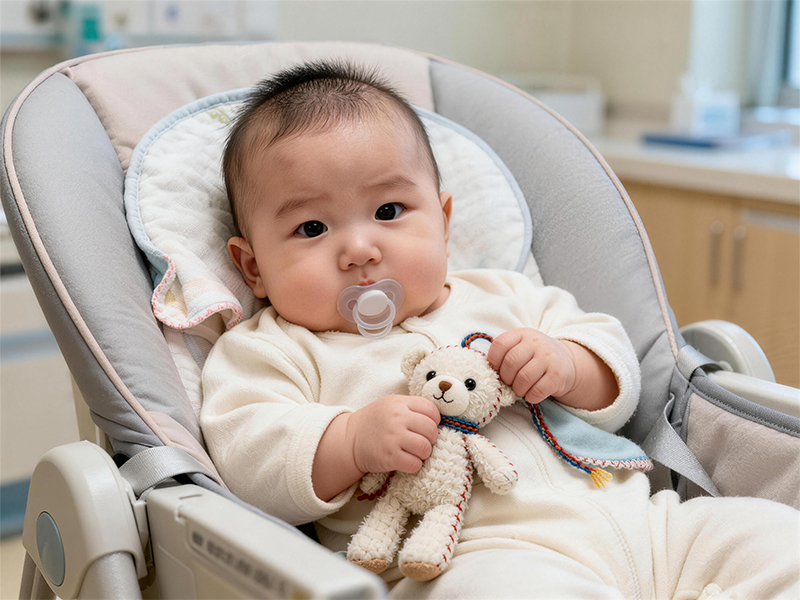
Patient records
Name: Batbayar (pseudonym)
Age: 11 months
Nationality: Ulaanbaatar, Mongolia
Diagnosis: Congenital biliary atresia, decompensated biliary cirrhosis after Kasai procedure.
Treatment Hospital: Beijing Friendship Hospital, Capital Medical University
Pediatric living donor liver transplantation is the crown jewel of organ transplantation. It tests not only surgical skills but also a healthcare system's comprehensive capabilities in donor safety, postoperative management, and long-term follow-up. For the Batbayar family, this cross-border life-saving relay began with heartbreaking news.
1. "Without a liver transplant, he wouldn't have lived past one year old."
Batbayar was diagnosed with congenital biliary atresia shortly after birth. Despite undergoing the Kasai procedure (a palliative surgery) at two months of age, the outcome was poor, and he quickly progressed to biliary cirrhosis, massive ascites, and recurrent cholangitis. A pediatrician in Mongolia told his mother, "Without a liver transplant, he won't live past one year old."
Liver transplantation is an impossible procedure in Mongolia. In despair, this young mother made a decision: she would donate a portion of her own liver to save her child. But where to get it done? How to do it? She had no idea.
2. Our Value: Drawing a Roadmap for the "Impossible Mission"
When Batbayar's mother contacted us through an international charity, time was of the essence. The child's liver function was deteriorating rapidly, he had severe ascites, and extremely poor blood clotting. Our medical case manager immediately initiated the "Emergency Response Process for Pediatric Liver Transplantation":
Step 1: Simultaneous Evaluation of Donor and Recipient. Pediatric living donor liver transplantation requires simultaneous evaluation of both the child (recipient) and the mother (donor). We assist in compiling a complete "Donor-Recipient Joint Evaluation Summary" based on the imaging and blood test data of both individuals, and submit it in advance to the pediatric liver transplant expert team at Beijing Friendship Hospital, affiliated with Capital Medical University . This means that when the mother and child arrive in China, the experts already have a thorough understanding of key information such as vascular anatomy, liver volume, and blood type compatibility, allowing them to directly enter the surgical planning stage.
Step Two: Ethical Review and Psychological Support. Living donor liver transplantation involves complex ethical issues. We assisted the hospital's ethics committee in preparing and translating documents for the international ethical review. Simultaneously, our case manager had multiple in-depth conversations with the mother to ensure she fully understood the risks of the surgery—not only for her child but also for herself. We told her, "You have the right to withdraw at any time; this will not affect our commitment to helping your child." This respect for the donor's rights is a core aspect of our professionalism.
Step Three: Full-time support to alleviate fear of being in a foreign land. When the mother and child arrived in China, our Mongolian-Chinese bilingual coordinator was already waiting at the airport. From admission procedures and pre-operative consultations to waiting and accompanying them on the day of surgery, and coordinating post-operative ICU visits, our coordinator was present throughout. For a young mother who couldn't speak Chinese and had never left Ulaanbaatar before, the presence of this "person by her side" was key to helping her get through that difficult time.
3. Post-diagnosis services and follow-up: Safeguarding the long-term health of "two lives"
The surgery was a great success. The left lateral lobe of my mother's liver, which was removed, grew rapidly in Batbayar's body, and her liver function returned to normal within a week. But for us, the real challenge lies in the long-term "dual management" after the surgery:
Patient Tracking: Growth, Development, and Immune Management. We established a "Post-Liver Transplant Growth Record" for Batbayar, collecting monthly data on his growth and development indicators such as weight, height, and head circumference via remote follow-up, as well as laboratory results including immunosuppressant blood concentrations, liver function, and kidney function. Our case manager compiles this data into trend charts, and immediately activates alerts if any deviations in the growth curve or abnormal laboratory results are detected, assisting in contacting experts in China for remote adjustments.
Donor Support: Mother's Liver Regeneration and Psychological Care. We also established a "Post-Donor Health Record" for the mother, regularly tracking her liver regeneration, incision healing, blood tests, and liver function. More importantly, we paid attention to her psychological state—some donors experience anxiety or depression after living donor liver transplantation. Our case manager proactively inquired about her mood and sleep during each follow-up visit, and advised her to seek professional psychological support when necessary.
Regular follow-up examinations in China are scheduled. Based on the transplant center's follow-up plan, we arrange for the mother and child to return to China annually for check-ups, including: liver ultrasound, vascular imaging, and immunosuppressant adjustments for the child; and CT scan of the donor liver and liver and kidney function assessments. All examination results are compiled into an "Annual Follow-up Report" by our case manager and simultaneously sent to the transplant team in China and the pediatrician in Mongolia.
4. Therapeutic Effects and Insights
Three years after the transplant, Batbayar is now a lively and adorable four-year-old boy with normal liver function and growth and development that has caught up with his peers. His mother wrote in a New Year's greeting to us: "Three years ago, I came to China with a dying child and a desperate self. Three years later, I returned to Mongolia with a healthy child and a reborn self. Although you are not doctors, you are the ones who accompanied us through our most difficult time."