
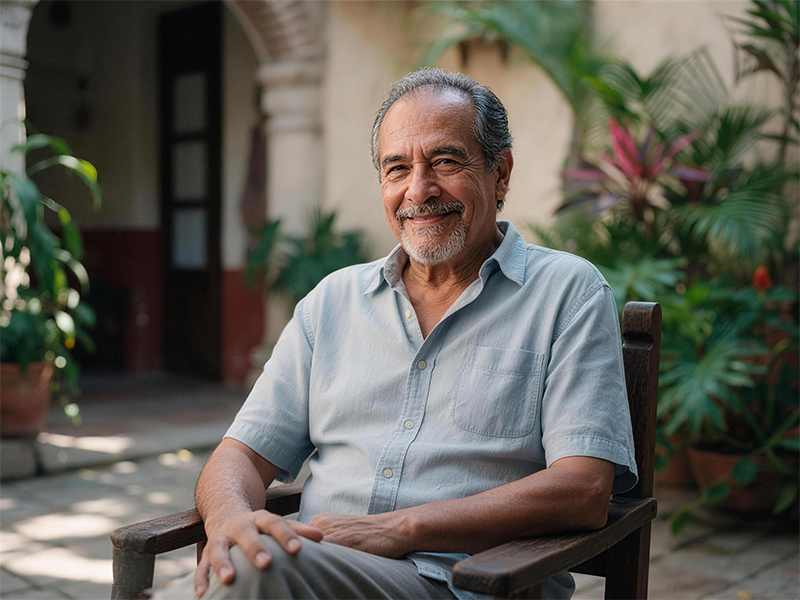
Patient records
Name: Carlos
Age: 68
Nationality: Mexico
Diagnosis: Sigmoid colon adenocarcinoma with synchronous liver metastasis (cT3N1M1a, stage IVA), RAS/BRAF wild-type
Treatment Hospital: Colorectal Cancer Comprehensive Treatment Center, Ruijin Hospital Affiliated to Shanghai Jiao Tong University School of Medicine
In the field of oncological surgery, "unresectable" is a devastating verdict. It acts like an invisible wall, shutting patients out of radical surgery. But Carlos's story proves that this wall can sometimes be torn down.
1. "We don't believe he can only 'appease' him."
Carlos's colon cancer was discovered during an emergency visit to the hospital due to intestinal obstruction. Worse still, a CT scan also revealed three metastatic lesions in his liver, the largest located in the right lobe, adjacent to the inferior vena cava—the body's largest vein. After evaluation, oncologists in Mexico City determined that the liver metastases were in an inaccessible location and surgically inoperable, recommending palliative chemotherapy.
The word "palliative care" pierced Carlos and his family's hearts like a knife. His son found us online, and during the video call, the man in his thirties had tears in his eyes: "My father is only 68 years old and has always been in good health. We don't believe he can only be treated with 'palliative care.' Please help us see if there is any chance of surgery?"
2. Our Value: Finding hope in "conversion therapy" amidst the despair of "unresectable" cases.
Carlos's condition, in the field of colorectal cancer with liver metastasis, falls under the category of "initially unresectable." However, "unresectable" does not equate to "permanently unresectable." While reviewing his genetic report, we discovered a crucial piece of information: he is a RAS/BRAF wild-type. This means he is sensitive to EGFR-targeted drugs (cetuximab), providing a biological basis for potent conversion therapy.
Precise matching and treatment plan planning. We matched him with a domestic multidisciplinary team (MDT) specializing in the diagnosis and treatment of colorectal cancer liver metastases.
The Colorectal Cancer Comprehensive Treatment Center of Ruijin Hospital Affiliated to Shanghai Jiao Tong University School of Medicine , a center with extensive experience in the field , proposed a bold "conversion therapy" plan during a remote consultation: using the most potent three-drug chemotherapy (FOLFOXIRI) combined with cetuximab, aiming to shrink the liver metastases in the shortest possible time and strive for surgical opportunities. We frankly explained the risks to the family: this plan is intensive and has significant side effects, but it is the best option to try and secure a surgical outcome .
Strong support during and after treatment. Carlos received four cycles of intensive conversion therapy in China. During treatment, he experienced severe stomatitis and diarrhea. Our coordinator was with him almost daily, helping him contact nutritionists, adjust his diet, and manage side effects. A follow-up CT scan revealed a miracle: the liver metastases had shrunk by 60%, and the gap between them and the inferior vena cava had significantly widened, meeting the criteria for surgical resection. He subsequently underwent successful radical resection of both his colon cancer and liver metastases. Post-treatment, we established a "Colorectal Cancer Postoperative Adjuvant Chemotherapy and Recurrence Monitoring File" for him, tracking his CEA levels monthly and coordinating quarterly CT scans in Mexico. Our core mission is to closely monitor tumor markers and imaging changes, immediately activate early warning systems upon detecting signs of recurrence, and assist him in contacting Chinese experts to assess the need for a second surgery or treatment adjustment.
3. Therapeutic Effects and Insights
Two years after the surgery, Carlos's tumor has not recurred. In a thank-you video he sent us, he said, "What you helped me overturn was not just a diagnosis, but a 'not resectable' judgment. You let me know that a disease deemed 'palliative' in Mexico can still be 'transformed' in China. Thank you for giving my father a second life."