
Patient records
Name: Carlos
Age: 45
Nationality: Mexico
Diagnosis: Common bile duct transection injury after laparoscopic cholecystectomy (Strasberg E4 type), obstructive jaundice, early stage of biliary cirrhosis.
Treatment hospital: Beijing Tsinghua Changgung Hospital.
Laparoscopic cholecystectomy is one of the most common surgeries in general surgery, but it has a rare yet disastrous complication: iatrogenic bile duct injury. Carlos's story tells how he found top experts in China to repair this "disaster."
1. A bile duct that was "accidentally damaged"
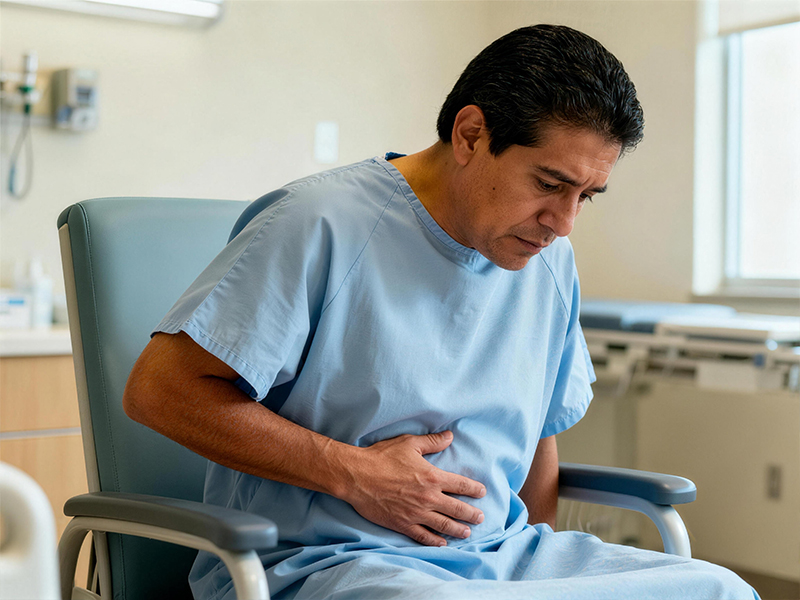
Carlos underwent a laparoscopic cholecystectomy at a hospital in Mexico City due to gallstones. The surgery itself went smoothly, but the day after the operation, he began experiencing abdominal pain and bloating, and his skin and eyes gradually turned yellow. Doctors initially thought it was a normal postoperative reaction, but the jaundice worsened. Further MRCP revealed a disastrous result: his common bile duct had been accidentally injured and completely severed during the surgery, preventing bile from flowing into the intestines. Instead, bile was accumulating in the abdominal cavity and refluxing into the bloodstream, causing severe obstructive jaundice and biliary peritonitis.
He immediately underwent an emergency exploratory laparotomy. Doctors attempted to repair the injury, but due to severe local inflammation and infection, the repair failed, and a drainage tube was placed to drain the bile. He lost hundreds of milliliters of bile daily through the drainage bag, and his body rapidly became emaciated and deteriorated. Doctors in Mexico told him that repairing this type of high-level bile duct injury is extremely difficult, requiring multiple surgeries, and may ultimately require a liver transplant.
2. Our Value: Finding hope for "one-time precise repair" amidst the despair of "multiple surgeries" and "liver transplants".
When Carlos's family contacted us through an international medical aid organization, his condition was already very serious. After analyzing his medical records, our medical case manager identified a key direction: China possesses world-leading experts and the largest number of cases of experience globally in the repair and reconstruction of biliary tract injuries.
Precise matching and treatment plan. We matched him with a center in China with an internationally renowned expert in biliary surgery—Beijing Tsinghua Changgeng Hospital. Under the leadership of Academician Dong Jiahong, this hospital is at the forefront of international precision hepatobiliary surgery and the treatment of complex biliary tract diseases. During the remote consultation, after carefully studying Carlos's imaging data, the expert proposed a "one-time precise repair" plan: after fully controlling infection and providing nutritional support, a Roux-en-Y hepatic duct-jejunostomy would be performed, precisely anastomosing the healthy hepatic duct above the injury site to a section of free jejunum to reconstruct the bile outflow tract.
We provided full-time care and nutritional support. When Carlos arrived in China, he was severely malnourished. Our coordinator not only provided medical translation but also assisted the hospital's nutrition department in developing a combined enteral and parenteral nutrition program to bring his physical condition to a level where he could tolerate the surgery. The surgery was very successful, and his external drainage tubes were finally removed.
Post-operative care and follow-up. We established a "Remote Follow-up Record after Biliary Tract Repair Surgery" for him, with the core task of monitoring the patency of the anastomosis and the presence of cholangitis. We collect his liver function indicators monthly through remote follow-up, and coordinate for him to undergo MRCP examination in Mexico quarterly, sending the imaging discs back to China for remote review by experts to assess the anastomosis.
3. Therapeutic Effects and Insights
Two years after the surgery, Carlos's liver function is completely normal, and he has not experienced cholangitis again. In a thank-you video he sent us, he said, "What you helped me find was not a simple repair. Thank you for waking me up from the nightmare of a 'minor surgery' and allowing me to live a normal life again."