
Patient records
Name: David Chen
Age: 52
Nationality: Vietnamese
Diagnosis: Acute Stanford type A aortic dissection (DeBakey type I, involving the ascending aorta, aortic arch, and descending aorta, complicated by severe aortic regurgitation)
Treatment Hospital: Fuwai Hospital, Chinese Academy of Medical Sciences (National Center for Cardiovascular Diseases) — Vascular Surgery Center
David now jogs 5 kilometers along the Vancouver beach every morning. He says that with each heartbeat, he feels grateful that life can be so peaceful and powerful. However, six months ago, what was beating in his chest was a "time bomb" that could tear him apart and devour him at any moment.
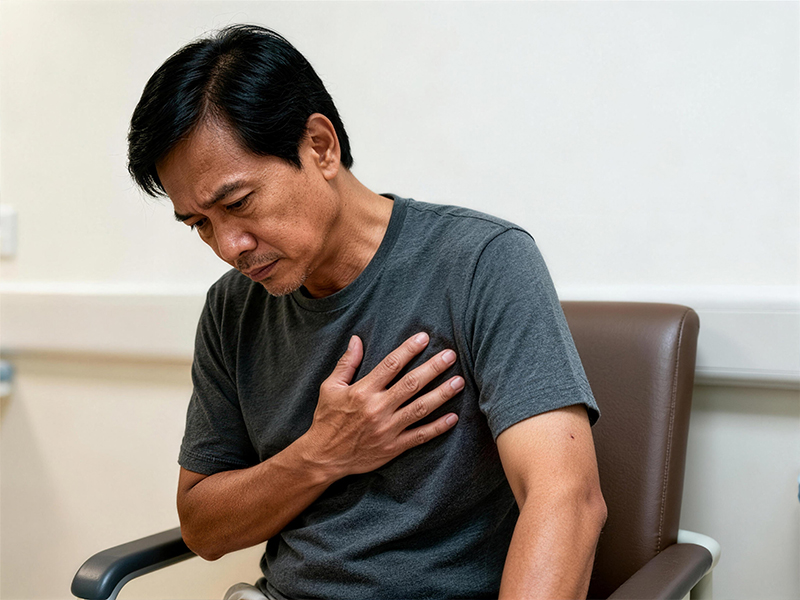
It was an ordinary weekend when David suddenly felt a tearing pain in his chest, which instantly spread to his back. He described the pain as feeling like someone was stabbing his chest with a knife, unlike any discomfort he had ever experienced before. An ambulance took him to the local hospital, where a CT angiography (CTA) revealed an acute Stanford type A aortic dissection. This is one of the most dangerous emergencies in cardiovascular surgery, where a high-speed blood flow tears open the aortic intima, allowing blood to rush into the dissected vessel wall and tear the entire aorta from end to end, leading to severe aortic regurgitation. Without immediate surgery, the mortality rate within 48 hours exceeds 50%. The Vietnamese doctors frankly informed him that the surgery was extremely complex and high-risk, and the local waiting time for surgery might not be sufficient to meet the critical window for such an emergency.
In desperation, David's family contacted us. Our case manager immediately activated the "rapid response mechanism for critical cases." For type A aortic dissection, every hour is a matter of life and death. We quickly focused on Fuwai Hospital of the Chinese Academy of Medical Sciences, the world's largest cardiovascular disease treatment center, whose vascular surgery center ranks among the world's top in terms of the number and success rate of aortic dissection surgeries performed annually. While coordinating international SOS medical transport, we transmitted David's CTA images to the expert team at Fuwai Hospital in real time. En route to Beijing, a multidisciplinary consultation was completed. The experts provided a clear surgical plan: Bentall procedure + total aortic arch replacement + elephant trunk stent implantation, commonly known in the industry as the "Sun's procedure." The experts used 3D animation models to visually explain to David's family how this surgery would replace his diseased ascending aorta and aortic arch with an artificial blood vessel, repair the heart's "valve," and implant an elephant trunk-shaped stent in the descending aorta, reserving a "track" for subsequent treatment of possible distant lesions.
The surgery, performed by the director of the Vascular Surgery Center, successfully removed the "bomb" after eight hours of meticulous care using deep hypothermic circulatory arrest and selective cerebral perfusion. Post-surgery, our case manager provided full support , from ICU monitoring to rehabilitation in a regular ward, updating the family daily on the patient's progress and assisting with communication with the medical team. After returning home, we established a remote anticoagulation management file for him, ensuring accurate and safe dosage of his lifelong warfarin through regular monitoring of his coagulation function. Now, David's heart beats steadily and powerfully—a melody of life returning to peace.