
Patient records
Name: Tanaka Yuki
Age: 55
Nationality: Japan (Fukuoka)
Diagnosis: Primary hemifacial spasm (left side, 5-year course, reduced effectiveness of botulinum toxin treatment, severely affecting social life)
Treatment Hospital: Department of Neurosurgery, West China Hospital of Sichuan University
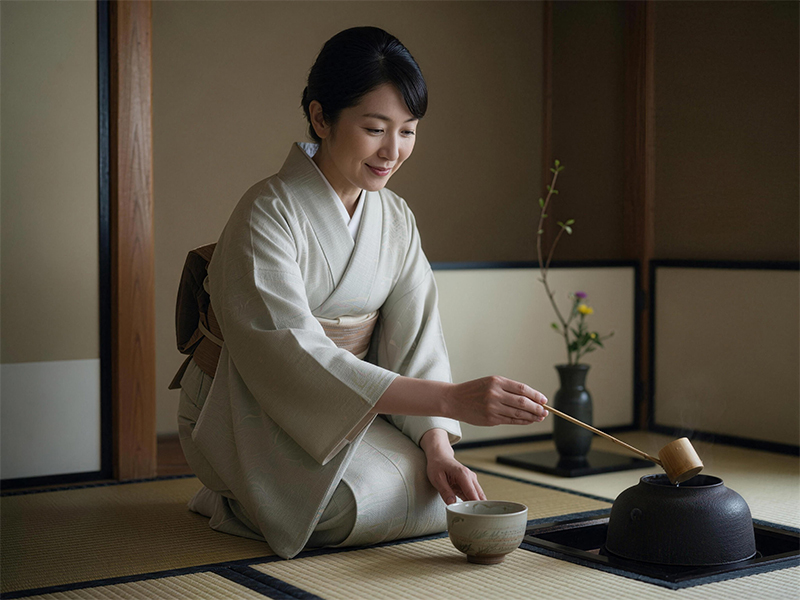
In the video sent by Ms. Yuki, she is dressed in an elegant kimono, smiling as she serves tea to guests in a tea ceremony classroom. Her expression is gentle and natural, with no more twitching in her left eye or the corner of her mouth. In her letter, she wrote, "Thank you for removing the 'straitjacket' from my face, allowing me to resume this work that requires concentration." Just a year ago, however, her face felt as if it were being constantly pulled by an invisible hand.
Ms. Yuki is a tea ceremony teacher, whose work requires a state of profound tranquility and harmony. However, five years ago, her left eyelid began to twitch involuntarily. Initially, she thought it was just fatigue, but the twitching became more frequent and widespread, spreading from her eyelid to her entire left side of her face, even pulling her mouth crooked. This facial spasm made it impossible for her to maintain a calm demeanor while teaching tea ceremony, and she felt incredibly embarrassed even when making eye contact with people. In Japan, she underwent Botox injections, which initially worked well, but over time the effects became shorter-lasting, the dosage increased, her face became stiff, and she lost her natural smile.
When Ms. Yuki learned through us about a surgical procedure that could cure the condition, she saw hope. Our case manager precisely matched her with the Department of Neurosurgery at West China Hospital of Sichuan University, a leading center for functional neurosurgery in China, renowned for its precise and minimally invasive microvascular decompression surgery.
We helped arrange a remote consultation. The expert team at West China Hospital, through the 3D-TOF-MRA images we transmitted, clearly saw a culprit blood vessel, like a string, tightly compressing the root of Ms. Yuki's left facial nerve. Our medical consultant explained to her : "This surgery is called microvascular decompression. The doctor will make a very small bone window behind your ear, locate the blood vessel compressing the nerve under a microscope, and then use a special pad to separate it from the nerve, fundamentally relieving the compression."
Yuki 's surgery was performed under neurophysiological monitoring. Under a microscope, the surgeon carefully separated the arachnoid membrane and located the culprit blood vessel. The most crucial step was that, at the moment the blood vessel was opened, the waveform representing abnormal muscle response—AMR—miraculously disappeared on the electrophysiological monitor , indicating that the nerve compression had been relieved .
period and follow-up , Ms. Yuki's facial twitching stopped immediately after the surgery. Our case manager , following the doctor's advice, developed a detailed post-operative rehabilitation plan for her, including functional exercises for her facial muscles. After returning home, she regularly uploaded videos of her face through our app, which were then remotely evaluated by our expert team at West China Hospital. Six months later, her facial function had fully recovered, and the "strain" that had plagued her for five years was finally lifted. She returned to the tea ceremony classroom, greeting each student with her peaceful and natural smile.