
Patient records
Name: Somsak Charoen
Age: 62
Nationality: Thailand (Bangkok)
Diagnosis: Severe stress urinary incontinence after radical prostatectomy (using more than 5 urinal pads daily, severely impacting social life).
Treatment Hospital: Department of Urology, Tongji Hospital Affiliated to Tongji Medical College, Huazhong University of Science and Technology
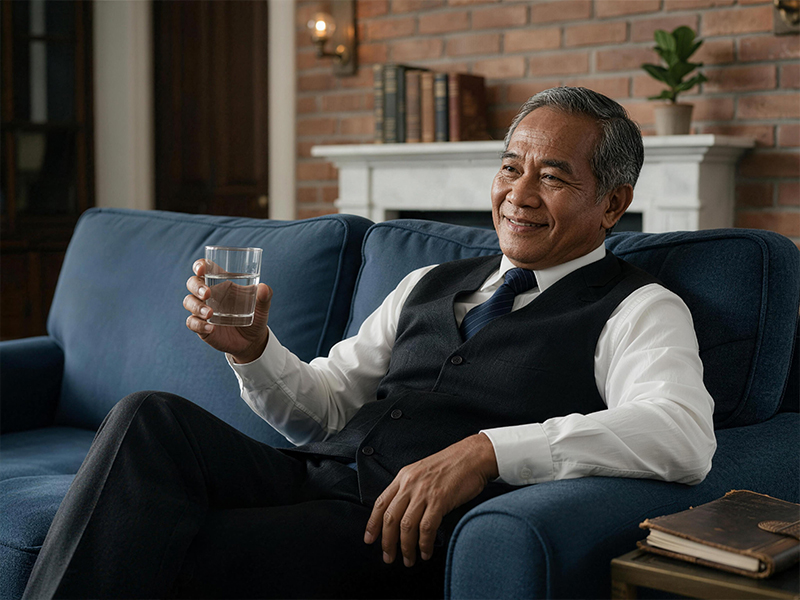
In the video sent by Mr. Charoen, he is wearing a sharp suit and confidently giving a speech at a business conference in Bangkok. His demeanor is composed and his movements are natural, a stark contrast to the man who, a year ago, was constantly worried about "accidents." In the video, he says, "Thank you for helping me overcome 'social anxiety' and allowing me to regain control of my life."
Mr. Charoen is a successful businessman; socializing is both his job and his life. However, two years ago, he underwent a radical prostatectomy for prostate cancer. The surgery was successful, and the tumor was completely removed, but he was left with a serious aftereffect—severe stress urinary incontinence. Because the urethral sphincter, which controls urination, was damaged during the surgery, he experiences uncontrollable leakage whenever he coughs, laughs, walks quickly, or even stands up from a seat. He has to use more than five adult insoles every day and always has a faint, unpleasant odor. This makes him afraid to attend any social events, afraid to shake hands with clients, and even afraid to hold his grandson. This disease, jokingly referred to as "social cancer," has plunged him into deep self-isolation.
In Thailand, he tried various methods, including pelvic floor muscle training and biofeedback therapy, but with little effect. When Mr. Charoen learned about a technology that allowed him to "artificially control urination" through us, he saw hope for returning to the social scene. Our case manager quickly connected him with the Department of Urology at Tongji Hospital, affiliated with Tongji Medical College of Huazhong University of Science and Technology, one of the earliest centers in China to perform artificial urethral sphincter implantation.
Before his appointment, we arranged a remote consultation. The expert team at Tongji Hospital, through the urodynamic and cystoscopic images we transmitted, confirmed that his bladder function was good and that he was an ideal candidate for AUS implantation. Our medical consultant explained to him using a sophisticated model: “The doctor will implant a cuff around your urethra, a control pump in your scrotum, and a reservoir in your abdomen. Normally, the cuff is filled with water, compressing the urethra to prevent leakage. When you want to urinate, simply squeeze the control pump in your scrotum, and the water will flow from the cuff to the reservoir, opening the urethra and allowing you to urinate normally. After a few tens of seconds, the water will automatically flow back into the cuff, restoring urinary control.”
The surgery was performed with meticulous care. The surgeon precisely implanted the three components into their designated locations and connected the tubing. During the procedure, repeated injection and aspiration tests were conducted to ensure that the cuff's opening and closing and the pump's sensitivity were optimal. Six weeks post-surgery, once the device was activated, Mr. Charoen experienced for the first time the long-lost, effortless feeling of urinary control.
During the post-diagnosis and follow-up process , our case manager provided him with detailed training on the use of the device, including how to operate the control pump and how to recognize early signs of complications such as infection. After returning to China, he regularly uploaded his urination diary and device usage information through our app. Our team would then compile this data and submit it to experts at Tongji Hospital for evaluation. A year later, Mr. Charoen had fully adapted to this "artificial valve" in his body, and he was back in the business world, confident and composed. He said that Chinese doctors gave him the ultimate weapon to defeat "social cancer."