
Patient records
Name: Sari Dewi
Age: 32
Nationality: Indonesia
Diagnosis: Complete placenta previa complicated by placenta accreta
Treatment Hospital: Tongji Hospital, Tongji Medical College, Huazhong University of Science and Technology
“The doctor told me that my placenta, like a tree root, had penetrated my uterus and grown onto my bladder. The risk of severe bleeding during childbirth is extremely high, and I might not even survive.” Sari, 32, from Surabaya, Indonesia, is a mother of two. Her voice trembled in the video. She had a history of one cesarean section, and this pregnancy was diagnosed with “complete placenta previa with placenta accreta,” one of the most dangerous complications in obstetrics, like a “time bomb” strapped to both mother and baby.
Sari and her husband approached us with a heavy but clear request: for both mother and child to be safe, and for every effort made to save her uterus. This case was immediately designated as a top priority "critical care transport" project. Our medical operations team knew this was no ordinary cesarean section, but a "life-saving battle" requiring meticulous planning and multi-agency collaboration.
Without hesitation, we selected the Department of Obstetrics at Tongji Hospital, affiliated with Tongji Medical College of Huazhong University of Science and Technology, for them. We explained to Mr. and Mrs. Sari that Tongji Hospital is a "national-level team leader" in handling such critical cases, and they have a mature "hybrid surgical protocol in the operating room." Our health consultant used a sand table simulation to explain in detail the principle of pre-positioning aortic balloon: before the cesarean section begins, an interventional radiologist places a balloon in the aorta. Once the fetus is delivered, the balloon is immediately inflated, temporarily blocking most of the blood flow to the uterus, creating a "bloodless" surgical field for the obstetrician to calmly remove the placenta and suture to stop the bleeding, thus preserving the uterus as much as possible.
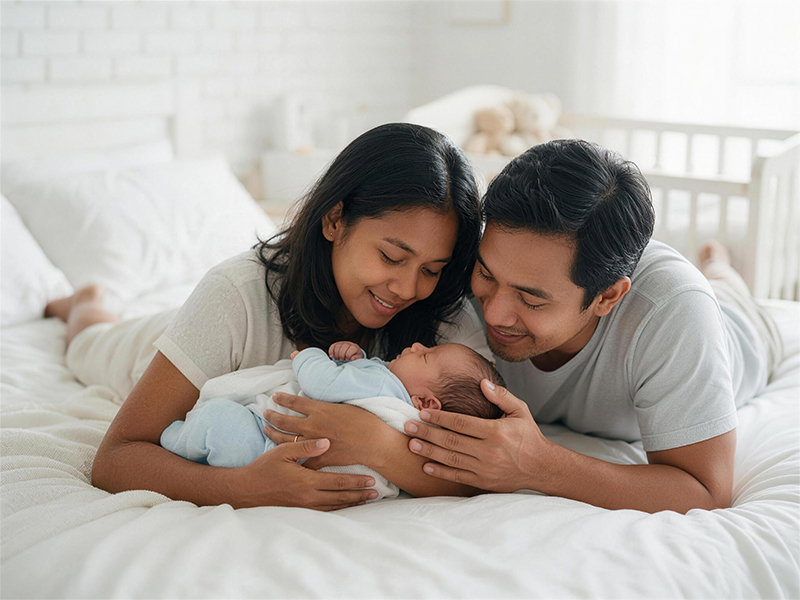
We coordinated Sari's entire international transfer, ensuring her safe arrival in Wuhan during her late pregnancy. We translated all imaging data and medical records in advance and organized a multidisciplinary team (MDT) consultation involving obstetrics, interventional radiology, anesthesiology, urology, and neonatology. On the day of the surgery, our medical consultant accompanied her husband outside the operating room, providing real-time updates on every development inside. When the baby's loud cry rang out, and when the doctor announced the successful preservation of the uterus, her husband, a strong man, crouched down and wept. A month later, we received a photo of Sari and her family of three. In the photo, she held her healthy baby, her smile serene and happy. "You did more than just provide medical services," she wrote, "you defused a bomb and gave us a complete family."