
Patient records
Name: Budi Santoso
Age: 45
Nationality: Indonesia
Diagnosis: Cholesteatoma-type otitis media (involving the ossicular chain)
Treatment Hospital: Eye, Ear, Nose and Throat Hospital Affiliated to Fudan University (Shanghai)
Budi, a 45-year-old high school music teacher from Jakarta, Indonesia, had been suffering from recurring ear discharge and hearing loss for nearly a year. Worse still, he began to lose his ability to distinguish pitch, a devastating blow to his career. Local doctors diagnosed him with cholesteatoma-type otitis media, telling him it was a bone-eating disease that had damaged his ossicles. Surgery was considered high-risk, potentially leading to permanent hearing loss or even facial nerve damage and paralysis. Budi was plunged into deep despair.
Deeply understanding his needs and matching him with a personalized solution, Budi found us through our website. During the initial video consultation, our medical consultant didn't rush to recommend hospitals, but instead spent nearly an hour deeply understanding his core fears and expectations: his biggest fear wasn't the surgery itself, but losing control of his facial expressions and the ability to accurately listen to music. We carefully reviewed his temporal bone CT scan and found that although the cholesteatoma was extensive, the inner ear structure was still relatively intact. Based on his extremely high requirements for hearing reconstruction and facial nerve protection, we recommended the Department of Otolaryngology-Skull Base Surgery at the Eye, Ear, Nose and Throat Hospital affiliated with Fudan University. We explained to him that the hospital's expert team is highly experienced in intact mastoidectomy combined with ossicle implantation (PORP/TORP) surgery, capable of completely removing the lesion while reconstructing his ossicular chain with titanium alloy artificial ossicles, and utilizing intraoperative facial nerve monitoring technology to ensure the safety of his facial nerve. We translated several popular science articles and expert introductions about this technology for him to help build his confidence.
Beyond medical care, Budi arrived in Shanghai accompanied by his wife. Considering his background as a music teacher and his sensitivity to sound, our service team specially arranged a relatively quiet VIP ward away from the elevator shaft for him. After admission, we accompanied him throughout his pre-operative examinations, including hearing tests, ear endoscopy, and high-resolution CT scans. During the pre-operative consultation, the surgeon used a 3D reconstruction model that we translated to visually demonstrate the extent of the cholesteatoma, the damage to the ossicular chain, and the surgical reconstruction plan, completely alleviating his concerns. The surgery was very successful; the cholesteatoma was completely removed, and a precise artificial ossicle was accurately implanted.
After the surgery, our case manager paid special attention to his mental state, because the swelling and packing in the early postoperative period could affect his hearing and easily trigger anxiety. We communicated with him daily using a whiteboard and informed him of the recovery timeline in advance to put his mind at ease.
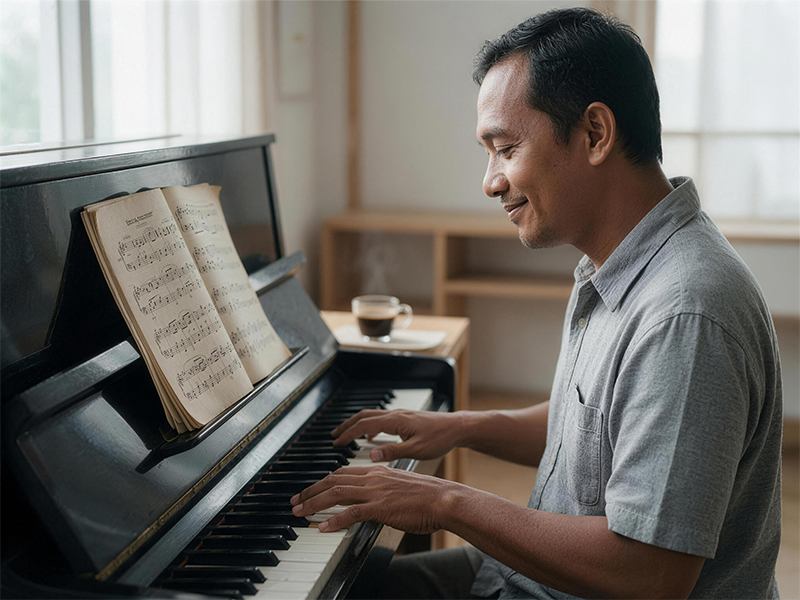
returned to his home country, we arranged a six-month remote rehabilitation program for him. Our health consultants regularly video-chatted with him, guiding him on ear care and coordinating with experts in Shanghai to interpret his audiograms from follow-up examinations. Three months after the surgery, once the artificial ossicles had healed and stabilized with the surrounding tissues, Budi's hearing improved significantly. He sent us an audio recording of himself playing an Indonesian folk song on the piano, with the message: "I can hear every note clearly again. Thank you for not only healing my ears but also allowing me to return to the podium and continue my musical life."