China-Japan Friendship Hospital ✓ Certified partner hospital

Beijing · Partner Hospital

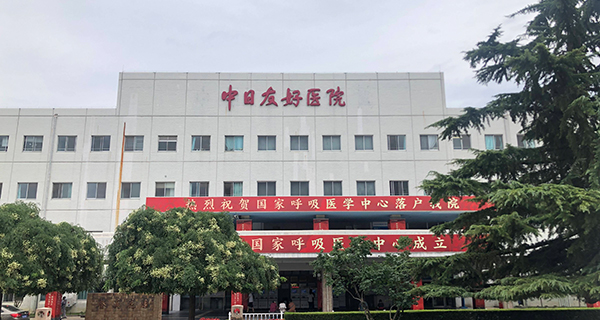
China-Japan Friendship Hospital

China-Japan Friendship Hospital is a national center for respiratory medicine, a national center for integrated traditional Chinese and Western medicine, a national center for telemedicine and internet medicine, a national clinical research center for respiratory diseases, a national telemedicine and training center, and the supporting unit of the World Health Organization (WHO) Collaborating Centre for Smoking Cessation and Prevention of Respiratory Diseases. The hospital is a national pilot hospital for high-quality development and a national pilot hospital for clinical research. It boasts 2 National Masters of Traditional Chinese Medicine, 3 National Renowned Traditional Chinese Medicine Practitioners, 5 Qihuang Scholars, and 9 Capital National Masters of Traditional Chinese Medicine. In the fields of intractable diseases, critical illnesses, and rare diseases, it ranks 5th nationwide according to the Fudan University rankings.

Rare & Complex DiseasesInternal MedicineRehabilitationOrgan Transplant
Request Hospital Matching

Hospital Introduction

1. Historical Origins and Spiritual Inheritance

The China-Japan Friendship Hospital (hereinafter referred to as the China-Japan Hospital) is a large-scale comprehensive tertiary-level Grade A hospital directly under the National Health Commission of China. It opened on October 23, 1984, with the hospital's name inscribed by Hu Yaobang, then General Secretary of the CPC Central Committee, and Deng Yingchao, then Chairman of the National Committee of the Chinese People's Political Consultative Conference. Born amidst China's reform and opening-up, the hospital was positioned as a model of modern hospitals in China, a base for integrating traditional Chinese and Western medicine, and a platform for international cooperation. From its inception, it was one of the most modern and international hospitals in China. With "dedication, love for the hospital, striving, and innovation" as its core spirit, the hospital integrates medical treatment, teaching, scientific research, and preventive healthcare functions, undertaking central government healthcare tasks and national emergency medical rescue missions.

2. Overall Scale and Hardware Capabilities

The hospital currently has 1,610 beds (including the North and West campuses), and is affiliated with the China-Japan Friendship Clinical Medical Research Institute. It serves as a clinical medical college for Peking University and Beijing University of Chinese Medicine, and a teaching hospital for Peking Union Medical College. The hospital boasts a comprehensive range of disciplines, including several national key clinical specialties such as Respiratory and Critical Care Medicine, Thoracic Surgery, and Traditional Chinese Medicine Pulmonary Diseases. The respiratory specialty alone has over 400 beds. The hospital has established a complete modern respiratory medicine discipline system and a modern hospital management system, equipped with advanced intensive care, respiratory support, and transplantation equipment, possessing the hardware capabilities to undertake medical treatment for major public health emergencies and national emergency missions.

3. National Ranking and Authoritative Certification

China-Japan Friendship Hospital is a national center for respiratory medicine, a national center for integrated traditional Chinese and Western medicine, a national center for telemedicine and internet medicine, a national clinical research center for respiratory diseases, a national telemedicine and training center, and the supporting unit of the World Health Organization (WHO) Collaborating Centre for Smoking Cessation and Prevention of Respiratory Diseases. The hospital is a national pilot hospital for high-quality development and a national pilot hospital for clinical research. It boasts 2 National Masters of Traditional Chinese Medicine, 3 National Renowned Traditional Chinese Medicine Practitioners, 5 Qihuang Scholars, and 9 Capital National Masters of Traditional Chinese Medicine. In the fields of intractable diseases, critical illnesses, and rare diseases, it ranks 5th nationwide according to the Fudan University rankings.

4. Core Business Data

The hospital ranks among the top large-scale comprehensive hospitals in Beijing in terms of annual outpatient and emergency visits and inpatient volume. Its respiratory and critical care medicine, thoracic surgery, organ transplantation, and integrated traditional Chinese and Western medicine departments are among the leading in the country in terms of workload. It performs nearly 100 lung transplants annually, with a perioperative survival rate of nearly 90%. The Department of Respiratory and Critical Care Medicine has opened over 400 respiratory specialty beds and performs thousands of interventional procedures such as bronchoscopy annually.

5. MDT Multidisciplinary Collaboration System

The hospital has established a comprehensive multidisciplinary team (MDT) model, offering multiple joint outpatient clinics and multidisciplinary ward rounds focusing on lung transplantation, gastrointestinal tumors, bone metastases, and rare and complex diseases. The Lung Transplant Center comprises a full-process care team from respiratory and critical care medicine, thoracic surgery, rehabilitation, anesthesiology, and nursing. Departments such as general surgery and colorectal surgery maintain long-term collaborations with Japanese medical institutions and experts, enabling them to invite international experts for cross-border MDT consultations and surgeries based on patient needs. The hospital's international department has established efficient and smooth MDT and consultation referral channels with various specialties.

6. International and Foreign-Related Medical Treatment System

The hospital has an international department that provides international and personalized medical services to expatriates in China, international patients, and patients with special medical needs. The international department wards have established multidisciplinary consultation and referral green channels with various specialties. From its inception, the hospital has served as a platform for international cooperation, maintaining long-term exchanges with medical institutions in Japan and many other countries around the world. It is an important window for national traditional Chinese medicine services and international medical cooperation, and has a mature system for accepting overseas patients for medical treatment and remote consultations.

Key Departments

Explore the Clinical Focus and Capabilities of This Hospital's Key Departments

Select a department to view its full profile.

Department Profile

Pain Rehabilitation

The Department of Pain Management at the China-Japan Friendship Hospital is one of the earliest established pain management departments in China, with a history of over thirty years. It serves as the leading unit for the "National Pain Treatment Research Center," the "National Pain Professional Medical Quality Control Center," and the "Beijing Pain Treatment Quality Control and Improvement Center," and was among the first batch of units selected for the "National Key Clinical Specialty Construction Project." The department's core strength lies in neuromodulation techniques (spinal cord stimulation, intrathecal drug infusion), with a focus on comprehensive cancer pain management and minimally invasive interventional treatment of neuropathic pain. It positions itself as a source of specialized development in pain medicine in China and a leader in the standardization of pain treatment techniques nationwide. The department is one of the largest, most technologically advanced, and most comprehensive pain management departments in China.

Historical Origins and Spiritual Inheritance:

Since its establishment, the Department of Pain Management at the China-Japan Friendship Hospital has successively become the leading unit of the "National Pain Treatment and Research Center" and the "National Pain Professional Medical Quality Control Center," and took the lead in establishing a "Pain Specialty Medical Consortium" in China. Professor Fan Bifa, as the discipline leader and a core member, participated in and promoted the Department of Pain Management to officially become a national first-level clinical medical specialty in 2007, witnessing and leading my country's pain medicine towards a new stage of standardized development. He proposed that "we must establish a pain medicine system of our own in China, so that every pain patient can receive professional treatment," a concept that has become the core driving force for the department's development.

Core business operational efficiency:

The department currently has subspecialties including "cancer pain," "neuropathic pain," "spinal pain," and "head and face pain," specializing in the treatment of intractable pain conditions such as trigeminal neuralgia, postherpetic neuralgia, lumbar disc herniation, lumbar spinal stenosis, and cancer pain using various minimally invasive techniques. The department offers all types of minimally invasive neurointerventional analgesia and minimally invasive spinal treatment techniques currently available in China. It was among the first in China to implement internationally advanced pain management techniques such as spinal cord stimulation (SCS) and central target-controlled analgesia (PUMP), making it the first and currently the department in my country to offer the most comprehensive range of these pain management techniques, pioneering the use of neuromodulation in the treatment of chronic pain in my country. The department has received nearly 1,000 visiting physicians from all over the country and 20 visiting scholars from all over the world. It undertakes clinical teaching tasks in pain medicine at Peking University School of Medicine and national key research and development projects.

Discipline Positioning and Benchmarking:

It is home to the National Center for Quality Control of Pain Management (established by the Department of Pain Management of China-Japan Friendship Hospital under the entrustment of the Medical Administration Department of the National Health Commission) and the Beijing Center for Quality Control and Improvement of Pain Treatment. Professor Fan Bifa serves as the Chairman of the Pain Branch of the Chinese Medical Association, the President of the Pain Physicians Branch of the Chinese Medical Doctor Association, and the Director of the National Center for Quality Control of Pain Management. The quality control indicators he spearheaded have become important references for hospital accreditation. The pain specialist medical consortium led by the department has covered more than 1,200 medical institutions nationwide, initially establishing a hierarchical diagnosis and treatment network with coordinated efforts between different levels of healthcare providers. The WHO's ICD-11 classifies chronic pain into seven categories. Professor Fan Bifa interprets this precise classification as providing a "common language" for interdisciplinary collaboration, promoting pain management from anesthesiology-related surgical analgesia to comprehensive management of pain issues across multiple departments.

Next Step

Is this hospital right for you?

Submit diagnosis, treatment history, and goals; hospitals and specialists recommend a formal case assessment.

Contact our service team