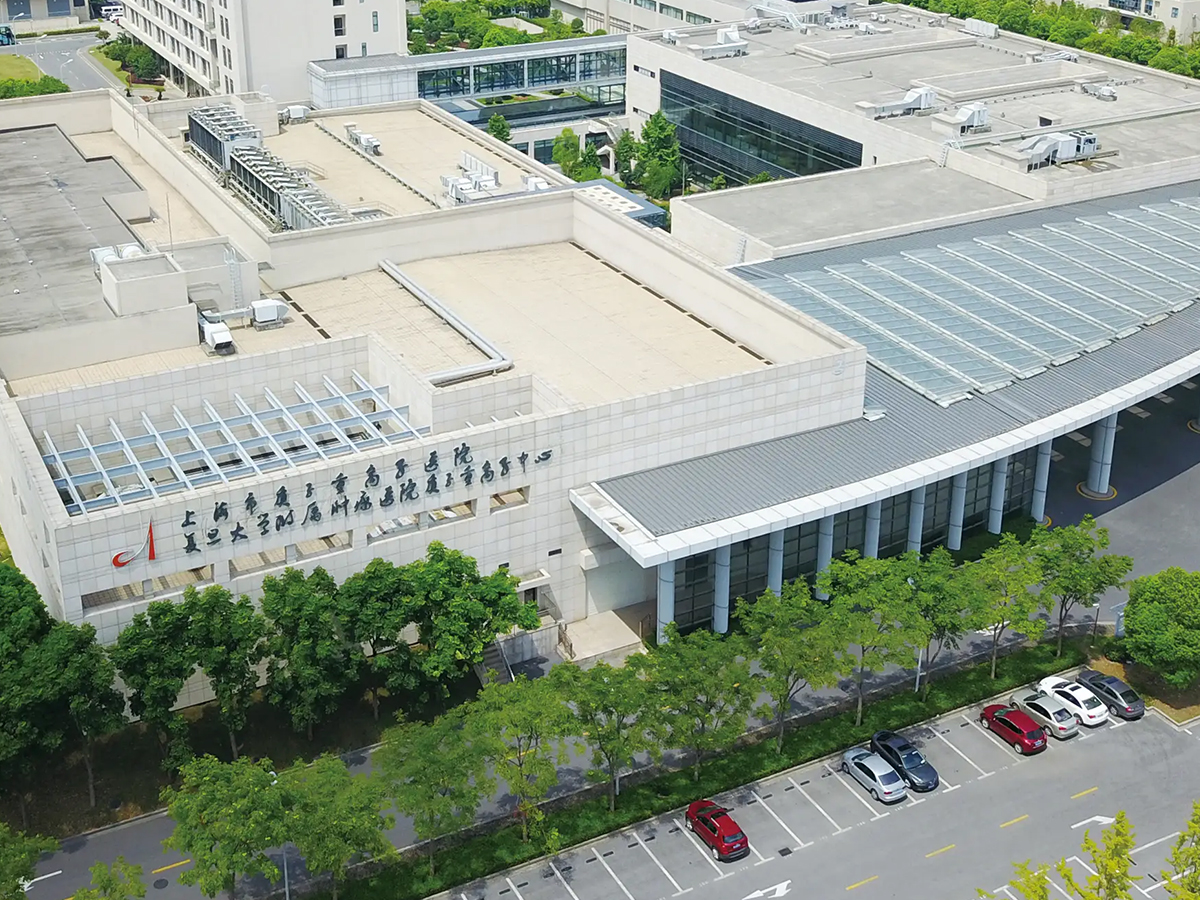

Shanghai Proton and Heavy Ion Hospital ✓ Certified partner hospital

Shanghai · Partner Hospital

Shanghai Proton and Heavy Ion Hospital

The hospital is the first medical institution in China and the third globally to possess both proton and heavy ion dual-particle radiotherapy platforms. It is a national hub for the clinical translation of particle radiotherapy technology and a national referral center for particle radiotherapy of localized solid tumors and tumors recurring after photon radiotherapy. The Radiotherapy Center is affiliated with the Shanghai Clinical Medical Research Center for Radiotherapy, the Shanghai Cancer Radiotherapy Research Center, and the Radiotherapy Quality Control Center. It is the first member unit in China of the Radiotherapy Toxicology Group (RTOG) and benchmarks itself against the Heidelberg Heavy Ion Center in Germany, the National Institute of Radiation Medicine in Japan, and the Proton Therapy Center at Massachusetts General Hospital in the United States.

Oncology
Request Hospital Matching

Hospital Introduction

1. Historical Origins and Spiritual Inheritance

The Shanghai Proton and Heavy Ion Center (also known as the Proton and Heavy Ion Center of Fudan University Cancer Hospital and the Proton and Heavy Ion Hospital Affiliated to Fudan University) project began preparations in the 1990s and officially launched in 2003. After a decade of dedicated development in Shanghai, it officially opened on May 8, 2015. It is the first medical institution in China and one of the few globally to possess both proton and heavy ion radiotherapy technologies. Located in Zhangjiang Science City, Pudong New Area, Shanghai, the hospital received accreditation from the Joint Commission International (JCI) in September 2017, becoming the first proton and heavy ion center in the world to achieve JCI accreditation. In January 2020, it was officially designated as the Proton and Heavy Ion Hospital Affiliated to Fudan University. The hospital remains committed to its mission of using cutting-edge radiotherapy technology to benefit cancer patients, achieving a leapfrog development in the new field of particle radiotherapy.

2. Overall Scale and Hardware Capabilities

The hospital covers a total area of 150 acres, with a first-phase construction area of 52,542 square meters and 220 approved beds. It is the only clinical medical research and development institution in China that simultaneously possesses photon, proton, and heavy ion technologies. The second-phase project commenced in September 2025 and will add one heavy ion and one proton device, expected to be completed by the end of 2028. At that time, it is expected to become the world's largest tumor particle radiotherapy center.

3. National Ranking and Authoritative Certification

The hospital is the first medical institution in China and the third globally to possess both proton and heavy ion dual-particle radiotherapy platforms. It is a national hub for the clinical translation of particle radiotherapy technology and a national referral center for particle radiotherapy of localized solid tumors and tumors recurring after photon radiotherapy. The Radiotherapy Center is affiliated with the Shanghai Clinical Medical Research Center for Radiotherapy, the Shanghai Cancer Radiotherapy Research Center, and the Radiotherapy Quality Control Center. It is the first member unit in China of the Radiotherapy Toxicology Group (RTOG) and benchmarks itself against the Heidelberg Heavy Ion Center in Germany, the National Institute of Radiation Medicine in Japan, and the Proton Therapy Center at Massachusetts General Hospital in the United States.

4. Core Business Data

As of May 2026, the center had treated and discharged a total of 9,317 patients, treating over 50 types of diseases, basically covering common malignant tumors among Chinese residents. Patients came from 31 provinces (autonomous regions and municipalities) across China, as well as Hong Kong, Macau, and Taiwan. In addition, over 100 overseas patients sought treatment there. As the world's first heavy ion center to treat over 1,000 patients annually, its single particle therapy unit has treated over 1,000 patients annually for five consecutive years, with a record high of 1,267 patients discharged in 2025 and a peak of 106 patients treated in a single day. Regarding costs, a course of proton and heavy ion therapy costs approximately 278,000 yuan. As a designated hospital for Shanghai Huibao (a social insurance program), the hospital has implemented direct reimbursement services, assisting nearly 1,000 insured patients to receive over 130 million yuan in compensation, with commercial insurance patients accounting for 40%. The 5-year overall survival rate for particle radiotherapy patients reached 70.4%, on par with cancer statistics from the American Cancer Society.

5. MDT Multidisciplinary Collaboration System

Relying on the clinical and academic support of Fudan University Cancer Hospital, the center deeply integrates cutting-edge radiotherapy technology with the comprehensive diagnostic and treatment capabilities of the cancer hospital to form a diagnostic and treatment system that uses particle technology for precise targeting and multidisciplinary collaborative decision-making. Together with the cancer hospital, it builds a multidisciplinary diagnostic and treatment platform for specific diseases based on tumor location, providing patients with precise particle radiotherapy plans.

6. International and Foreign-Related Medical Treatment System

The hospital is the first proton and heavy ion center in the world to be accredited by JCI. Its diagnostic and treatment efficiency and clinical efficacy lead the international institutions of its kind. Patients come from Hong Kong, Macao and Taiwan as well as more than 100 overseas patients. Its clinical application experience in heavy ion therapy is being exported to the world as a Chinese solution, benchmarking against the Heidelberg Heavy Ion Center in Germany, the National Institute of Radiation Medicine in Japan, and the Proton Center at Massachusetts General Hospital in the United States.

Key Departments

Explore the Clinical Focus and Capabilities of This Hospital's Key Departments

Department Profile

Proton / Heavy Ion Therapy Center

Shanghai Proton and Heavy Ion Hospital, also known as the Proton and Heavy Ion Center of Fudan University Cancer Hospital, is the first in China and the third in the world to simultaneously possess a proton and heavy ion dual-particle radiotherapy platform. It is a national highland for the clinical translation of particle radiotherapy technology and a national-level referral center for particle radiotherapy of localized solid tumors and recurrent tumors after photon radiotherapy. It is benchmarked against the Heidelberg Heavy Ion Center in Germany, the National Institute of Radiation Medicine in Japan, and the Proton Center of Massachusetts General Hospital in the United States.


The Proton and Heavy Ion Center of Fudan University Cancer Hospital (also known as Shanghai Proton and Heavy Ion Hospital) project began preparations in the 1990s and officially started in 2003. After ten years of construction, it officially opened on May 8, 2015. It is the first medical institution in my country and one of the few in the world to possess both proton and heavy ion radiotherapy technologies. Relying on the clinical and academic support of Fudan University Cancer Hospital, the center deeply integrates cutting-edge radiotherapy technology with the comprehensive diagnostic and treatment capabilities of a cancer specialty hospital, forming a diagnostic and treatment system of "precise particle technology and multidisciplinary collaborative decision-making".


Core business operational efficiency:


As of May 2026, the center had treated and discharged a total of 9,317 patients, treating more than 50 types of diseases, basically covering common malignant tumors among Chinese residents. Patients came from all 31 provinces (autonomous regions and municipalities) in my country, as well as Hong Kong, Macao and Taiwan. In addition, more than 100 overseas patients sought treatment there. As the world's first heavy ion center to treat more than 1,000 patients annually, its single particle device has treated more than 1,000 patients annually for five consecutive years. In 2025, it treated and discharged 1,267 patients, setting a new historical record. The peak number of patients treated in a single day reached 106, making its treatment efficiency among the best in similar international institutions. In terms of cost, a course of proton and heavy ion therapy costs about 278,000 yuan, which is currently not covered by medical insurance. However, as a designated hospital for "Shanghai Huibao" (a social insurance program), the hospital has opened a direct reimbursement service, assisting nearly a thousand insured patients to receive a total of more than 130 million yuan in reimbursements. The proportion of patients covered by commercial insurance is as high as 40%.


Discipline Positioning and Core Advantages:


The center is the only clinical medical research and development institution in China that simultaneously possesses photon, proton, and heavy ion technologies. The radiotherapy center is affiliated with the Shanghai Clinical Medical Research Center for Radiotherapy, the Shanghai Tumor Radiotherapy Research Center, and the Radiotherapy Quality Control Center. It is also the first member unit in China of the Radiotherapy Team Group (RTOG). Its core advantages can be summarized as a four-dimensional integration of "globally leading particle technology platform × leader in heavy ion clinical application × export of Chinese solutions × inclusive medical and insurance integration": the 5-year overall survival rate for particle radiotherapy patients reaches 70.4%, which is on par with the 5-year survival rate data for all cancers in the United States in the American Cancer Society's "2025 Cancer Statistics Report". The second phase of the hospital project commenced in September 2025, and will add one heavy ion and one proton therapy unit. It is expected to be completed by the end of 2028, at which time it is expected to become the world's largest tumor particle therapy center.

Next Step

Is this hospital right for you?

Submit diagnosis, treatment history, and goals; hospitals and specialists recommend a formal case assessment.

Contact our service team