
Ophthalmology
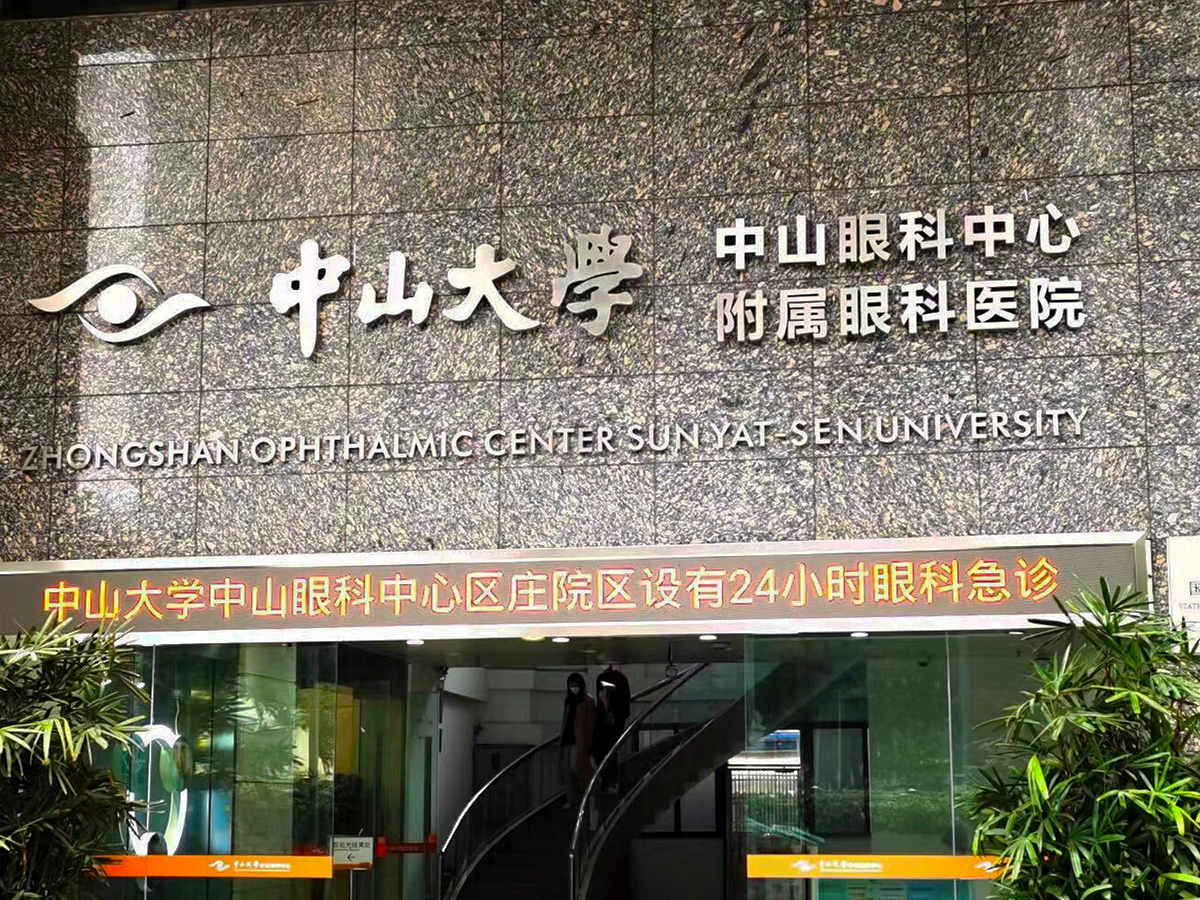
The National Key Laboratory for Prevention and Treatment of Eye Diseases (the only national key laboratory for ophthalmology in China, and the only affiliated unit in the field of ophthalmology in my country); a national key clinical specialty; a WHO Collaborating Centre for Eye Health and Vision; and a national clinical research center for eye diseases. The laboratory aims to become a world-class ophthalmology laboratory, focusing on major blinding eye diseases such as myopia, corneal diseases, cataracts, fundus diseases, and glaucoma. Its original research on human lens regeneration was recognized internationally as one of the top 8 breakthroughs in global medicine in 2016. The headquarters of the Asian Pacific Academy of Ophthalmology (APAO) is permanently located here.
- Historical Origins and Spiritual Inheritance
Its origins can be traced back to the Guangzhou Eye Hospital in 1835 (China's first Western-style hospital eye department and the birthplace of modern Western-style ophthalmology); in 1953, Professors Chen Yaozhen and Mao Wenshu established the Department of Ophthalmology at Zhongshan Medical College; in 1965, it became the first university-affiliated ophthalmology hospital in China; and in 1983, the Zhongshan Ophthalmic Center was officially established. Its core spirit is condensed as "Pioneering Spirit, Messenger of Light"—from the foundation of ophthalmology in China to global leadership, its mission has always been to conquer blinding eye diseases. It inherits the disciplinary spirit of upholding orthodoxy in blindness prevention, innovating in restoring sight, and integrating medical treatment with research, constructing a complete system integrating clinical diagnosis and treatment, scientific research transformation, talent training, and national blindness prevention.
- Core Business Efficiency
The hospital has two campuses, one in Quzhuang and the other in Zhujiang New Town, each with 12 subspecialties. It sees over 1.4 million outpatients and performs over 100,000 surgeries annually, with day surgery accounting for over 90%. It has established platforms for AI-based screening of eye diseases, gene diagnosis, and ocular tissue regeneration and transformation; built a national remote quality control and blindness prevention network for ophthalmology; undertaken national-level ophthalmology talent training projects; and constructed the largest ophthalmic biobank in China.
- Discipline Positioning
The only public tertiary-level Class A ophthalmology hospital directly under the National Health Commission, and the largest public ophthalmology hospital in my country; it has ranked first in the China Hospital Best Specialty Reputation Ranking (Ophthalmology) for 13 consecutive years, and its scientific and technological achievements have ranked first in the country for many years. It is ranked first in the world in the Nature Index for ophthalmology institutions; it benchmarks itself against Johns Hopkins and Bascom Palmer, top international ophthalmology centers; its original achievements in lens regeneration, AI-based ophthalmic screening, and myopia prevention have been included in WHO international guidelines, and many of its technologies have been clinically translated into clinical applications first in the world.