
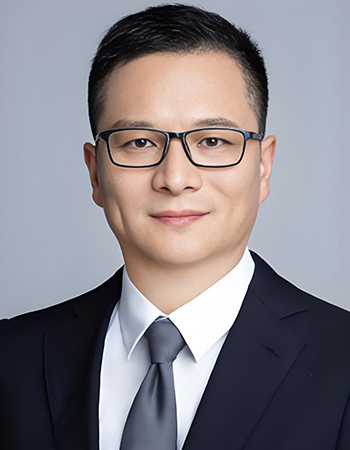
Vice President of the Eye, Ear, Nose and Throat Hospital Affiliated to Fudan University and Director of the Center for the Diagnosis and Treatment of Hereditary Deafness
 Affiliated HospitalEye, Ear, Nose and Throat Hospital Affiliated to Fudan University (Shanghai ENT Hospital)
→
Chief Physician, Dr., and Doctoral Supervisor. Recipient of the National Science Fund for Distinguished Young Scholars and the National Science Fund for Excellent Young Scientists, and winner of the 48th International ARO "Clinical Scientific Innovation Award" (the first time this award was given to an Asian scientist), the Shanghai Youth Science and Technology Outstanding Contribution Award, the Shanghai Municipal Hospital Clinical Innovation Award, the Huaxia Youth Medical Science and Technology Award, and the first prize in the Shanghai Municipal Health Commission Medical Innovation Talent Competition. Jointly trained doctoral student by Fudan University and Harvard Medical School, and a Shanghai Pujiang Talent. Entered the Eye, Ear, Nose and Throat Hospital Affiliated to Fudan University in 2007 for a combined Master's and Doctoral program, under the supervision of DR. Wang Zhengmin of the Chinese Academy of Sciences and Dr. Wu Haitao, an expert in otolaryngology. Proficient in the diagnosis and treatment of otolaryngological and head and neck surgical diseases, especially skilled in ear surgery and otoneurosurgery. Specializes in congenital and hereditary deafness (including gene testing and genetic counseling), childhood hearing loss, secretory otitis media (including pediatrics), infant hearing screening, acute and chronic otitis media, cholesteatoma of the middle ear, and age-related hearing loss. He led the completion of the world's first clinical trial for gene therapy for congenital deafness, innovatively employing a dual AAV vector split delivery strategy to overcome the technical bottleneck of single-vector gene capacity limitations, and independently developed a precise and minimally invasive ear delivery pathway and drug delivery device. This research was published in *The Lancet* in January 2024, and a multicenter clinical study was published online in *Nature* in April 2026. A 2.5-year follow-up showed that 90% of patients successfully regained hearing after gene therapy. A commentary article entitled "Gene therapy for deafness: We can do more" was published in *Nature Reviews Genetics* in December 2024. He is the director of the Shanghai Key Laboratory of Rare Disease Gene Editing and Cell Therapy.