Tsinghua University Beijing Tsinghua Chang Gung Hospital ✓ Certified partner hospital

Beijing · Partner Hospital

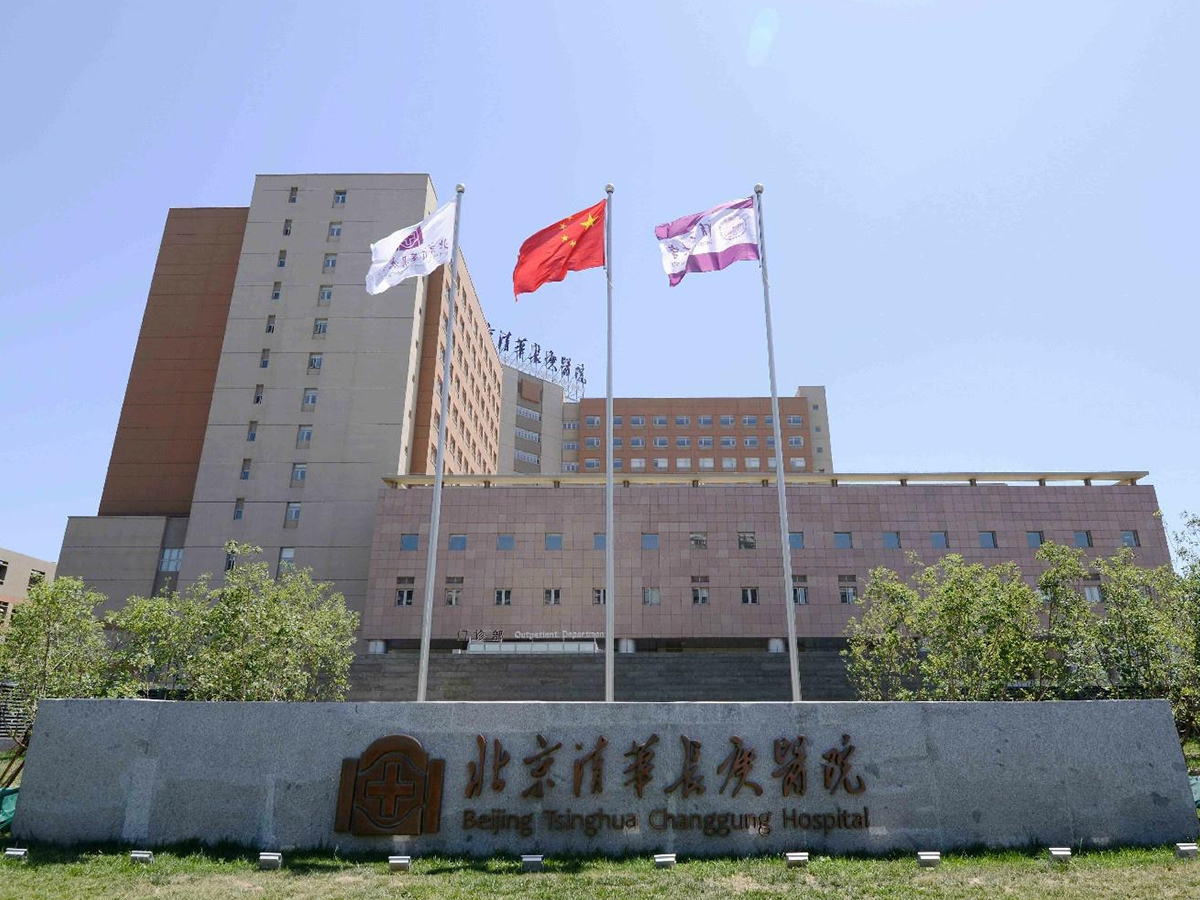
Tsinghua University Beijing Tsinghua Chang Gung Hospital

Relying on the comprehensive research university platform of Tsinghua University, the hospital has witnessed rapid development in its disciplines, steadily improving its overall ranking in the Fudan University's China Hospital Ranking, with several specialties entering the top ranks nationwide. The hospital is a Class A designated medical institution for Beijing's basic medical insurance, allowing Beijing medical insurance recipients to settle their medical expenses immediately without needing to select a specific institution, and also enabling direct settlement of medical insurance claims from other regions. The hospital is headed by Academician Dong Jiahong of the Chinese Academy of Engineering, and its Hepatobiliary and Pancreatic Center is the first fully integrated hepatobiliary and pancreatic medical center in Asia, serving as a national standardized diagnosis and treatment demonstration base for primary liver cancer.

Oncology
Request Hospital Matching

Hospital Introduction

1. Historical Origins and Spiritual Inheritance

Tsinghua University Affiliated Beijing Tsinghua Changgung Hospital is a large-scale comprehensive public hospital jointly built and managed by Tsinghua University and the Beijing Municipal Government. During its construction and operation, it received selfless donations and assistance from Formosa Plastics Group and Chang Gung Memorial Hospital in Taiwan. It officially opened on November 28, 2014. The hospital inherits the physician responsibility system and lean management philosophy of Chang Gung Memorial Hospital in Taiwan, adhering to the values of "three-pronged medical excellence" (precision, specialization, and progress) and "people-oriented, excellence, and public welfare," and taking humanism, lean management, intelligence, and environmental protection as its defining characteristics. In September 2024, Tsinghua University School of Clinical Medicine and the hospital implemented integrated management of medical care, education, and research. The School of Clinical Medicine was renamed Tsinghua University School of Clinical Medicine (Beijing Tsinghua Changgung Hospital), marking a new stage in the integrated development of medical care, education, and research for the hospital.

2. Overall Scale and Hardware Capabilities

Located in the Tiantongyuan area of Changping District, Beijing, the hospital has a total planned capacity of 1,500 beds. Phase I, with 1,000 beds, was opened. Phase II, with a foundation stone laid in December 2019 and put into use in recent years, added approximately 156,000 square meters of space, bringing the total number of beds to 1,500 and a daily capacity of over 10,000 patients. The hospital integrates medical treatment, education, and research, comprising seven departments: Internal Medicine, Surgery, Obstetrics and Gynecology & Pediatrics, Specialized Departments, Emergency and Critical Care, Medical Technology, and General Practice & Health Sciences, with over 50 clinical and medical technology specialties. It has also established several physical medical centers, including a Hepatobiliary and Pancreatic Center, a Neurology Center, a Digestive Center, and a Cardiovascular Center. The hospital highly values digitalization, equipped with cutting-edge technology platforms such as smart clinics, smart wards, digital operating rooms, digital imaging, digital pathology, large-scale medical models, medical robots, and digital twins. It serves as an important platform for the transformation of Tsinghua University's research achievements in smart healthcare and precision medicine.

3. National Ranking and Authoritative Certification

Relying on the comprehensive research university platform of Tsinghua University, the hospital has witnessed rapid development in its disciplines, steadily improving its overall ranking in the Fudan University's China Hospital Ranking, with several specialties entering the top ranks nationwide. The hospital is a Class A designated medical institution for Beijing's basic medical insurance, allowing Beijing medical insurance recipients to settle their medical expenses immediately without needing to select a specific institution, and also enabling direct settlement of medical insurance claims from other regions. The hospital is headed by Academician Dong Jiahong of the Chinese Academy of Engineering, and its Hepatobiliary and Pancreatic Center is the first fully integrated hepatobiliary and pancreatic medical center in Asia, serving as a national standardized diagnosis and treatment demonstration base for primary liver cancer.

4. Core Business Data

After the completion of the second phase of the hospital, its daily outpatient capacity will reach over 10,000 patients, and the volume of outpatient, emergency, and inpatient services will continue to grow with the opening of the second phase. The hospital performs a large number of highly complex surgeries, including multidisciplinary joint diagnosis and treatment of hepatobiliary and pancreatic tumors, complex biliary tract surgery, liver transplantation, neurosurgery, and cardiovascular intervention. It has a high proportion of patients with difficult and critical illnesses, and its CMI index ranks among the top in Beijing municipal and university-affiliated hospitals.

5. MDT Multidisciplinary Collaboration System

Drawing inspiration from the Chang Gung model, the hospital implements a patient-centered, integrated medical approach and physician responsibility system. It has established multiple physical, multidisciplinary treatment teams focusing on hepatobiliary and pancreatic tumors, neurological diseases, cardiovascular diseases, and digestive diseases. Platforms such as the Precision Diagnosis and Treatment Center for Liver Cancer bring together experts from surgery, internal medicine, interventional radiology, radiotherapy, pathology, and imaging, implementing one-stop joint outpatient clinics and ward rounds to provide patients with individualized, comprehensive treatment plans.

6. International and Foreign-Related Medical Treatment System

Relying on Tsinghua University's international academic network, the hospital has established in-depth collaborations with internationally renowned universities and medical institutions such as the Royal College of Surgeons of the United Kingdom. It has hosted high-level international academic events such as the Sino-British Hepatobiliary Surgery Cooperation Forum, and enjoys international influence in the fields of hepatobiliary surgery and precision surgery. The hospital provides medical services in accordance with international practices to expatriates and overseas patients in China, and is capable of undertaking international medical services and international telemedicine consultations.

Key Departments

Explore the Clinical Focus and Capabilities of This Hospital's Key Departments

Department Profile

Surgical Oncology

The Department of Oncology (Oncology Center) of Tsinghua University Beijing Tsinghua Chang Gung Hospital is a modern oncology treatment center built upon the comprehensive disciplinary advantages of Tsinghua University. Adhering to Tsinghua University's motto of "Self-reliance and Perseverance, Virtue and Responsibility" and the spirit of "Diligence and Simplicity" of Chang Gung Memorial Hospital in Taiwan, it practices the service philosophy of "Patients First." The department's flagship strength lies in the comprehensive diagnosis and treatment system for peritoneal cancer, with cutting-edge precision intelligent minimally invasive surgery for gastrointestinal tumors. Its distinctive treatment approach utilizes a multidisciplinary team (MDT) model involving doctors, nurses, and patients, positioning itself as an internationally leading innovation hub for peritoneal cancer diagnosis and treatment technology and a demonstration center for precision minimally invasive surgery for gastrointestinal tumors.


Historical Origins and Spiritual Inheritance:


The Department of Oncology at Beijing Tsinghua Chang Gung Hospital was officially established in 2014, with staff including physicians and nurses. All attending physicians (and above) were transferred from renowned tertiary hospitals in Beijing, while all resident physicians graduated from Peking University School of Medicine and Peking Union Medical College, holding at least a master's degree. Most physicians and nurses have received specialized training at Chang Gung Memorial Hospital in Taiwan. The oncology center has now become a comprehensive oncology treatment center covering multiple disciplines, including peritoneal oncology, gastrointestinal surgery, medical oncology, and radiotherapy.


Core business operational efficiency:


The Department of Oncology primarily handles the diagnosis and treatment of malignant tumors such as lung cancer, breast cancer, colorectal cancer, liver cancer, and pancreatic cancer, emphasizing multidisciplinary and standardized treatment. Under the leadership of Professor Li Yan, the Department of Peritoneal Oncology has completed over 3,300 related surgeries to date, achieving internationally leading technical standards. The Gastrointestinal Oncology MDT team, led by Professor Li Guoxin, holds regular MDT discussions every Tuesday afternoon. They have established an intelligent MDT data processing system to achieve structured integration of case data, forming a specialized gastrointestinal MDT database. This provides a data foundation for comprehensive patient management, follow-up tracking, quality control, and research analysis.


Discipline Positioning and Benchmarking:


It is a core discipline of the affiliated hospital of Tsinghua University School of Clinical Medicine, a Beijing resident physician training base, and a teaching and internship base of Tsinghua University School of Medicine. The Department of Peritoneal Oncology has established the "China Center of the International Federation for Peritoneal Cancer", the "China Center of the European Academy of Peritoneal Cancer", the "Beijing Training Base for Deep Hyperthermia and Whole-body Hyperthermia Techniques for Tumors", and the "Beijing International Science and Technology Cooperation Base for New Technologies in the Diagnosis and Treatment of Peritoneal Cancer". Professor Li Yan serves as the Standing Committee Member (the only representative from China) of the Executive Committee of the International Consortium for Peritoneal Surface Tumors (POSGI). She presided over the formulation of my country's "Expert Consensus on the Treatment of Peritoneal Pseudomyxoma with Tumor Cytoreduction Combined with Intraperitoneal Hyperthermic Chemotherapy," "Expert Consensus on the Diagnosis and Treatment of Malignant Peritoneal Mesothelioma," and "Expert Consensus on the Diagnosis and Treatment of Peritoneal Cancer." She also participated in the formulation of three international guidelines or expert consensuses on the diagnosis and treatment of peritoneal cancer. Professor Li Guoxin serves as the founder of the Chinese Laparoscopic Gastrointestinal Surgery Research Group (CLASS), Chairman of the Upper Gastrointestinal Tract Committee of the Surgical Committee for Capacity Building and Continuing Education of the National Health Commission, and Vice Chairman of the Gastric Cancer Quality Control Expert Committee of the National Cancer Center.
Next Step

Is this hospital right for you?

Submit diagnosis, treatment history, and goals; hospitals and specialists recommend a formal case assessment.

Contact our service team