
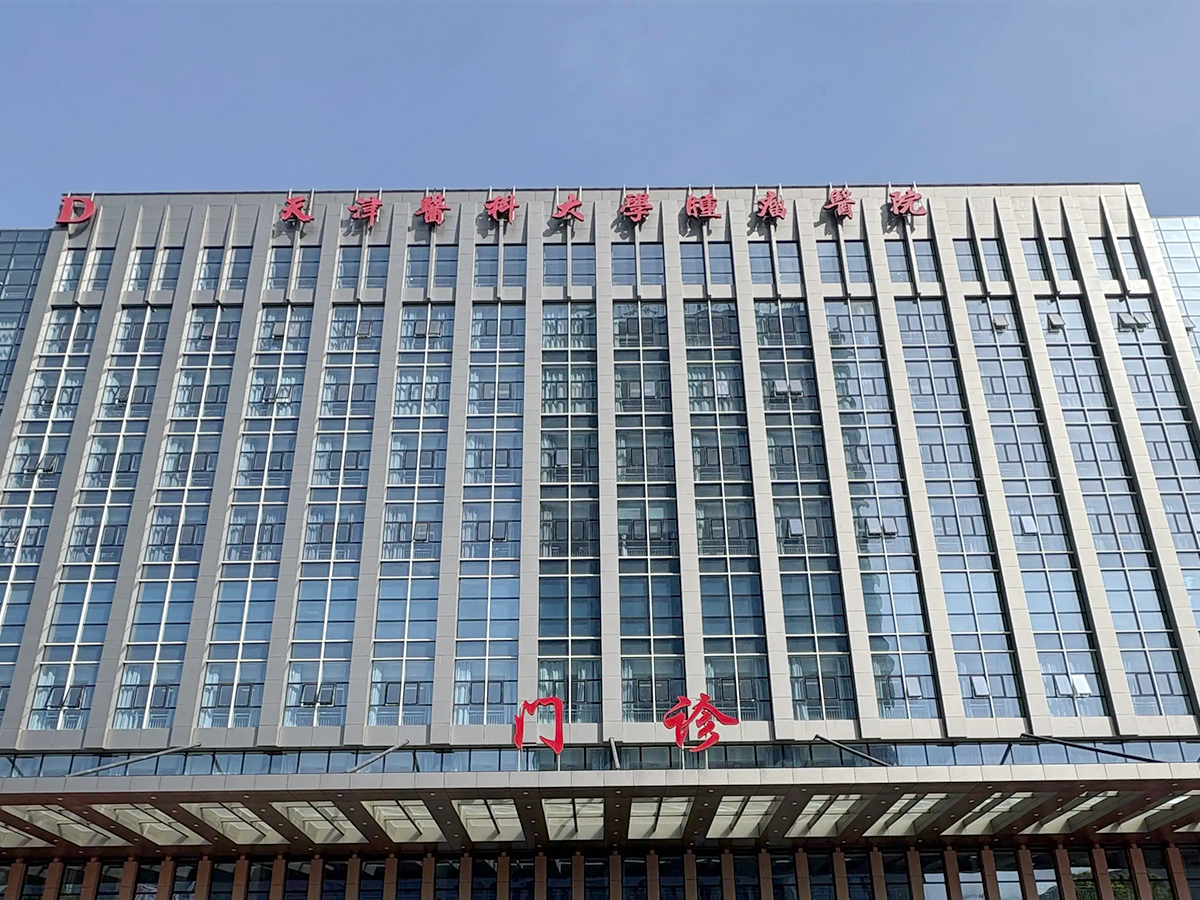
Tianjin Medical University Cancer Hospital ✓ Certified partner hospital

Tianjin · Partner Hospital

Tianjin Medical University Cancer Hospital

The hospital is among the first batch of national clinical research centers for malignant tumors and a national regional medical center export hospital. Its oncology department is a national key discipline and a national "Double First-Class" discipline, boasting seven national key clinical specialties. In the Fudan University's comprehensive ranking of Chinese hospitals by specialty, its oncology department ranks 5th nationwide, placing the hospital among the top tier of oncology hospitals in China in terms of overall strength.

OncologySurgery
Request Hospital Matching

Hospital Introduction

1. Historical Origins and Spiritual Inheritance

Tianjin Cancer Hospital (Tianjin Medical University Cancer Hospital) is the birthplace of oncology in China. Its origins can be traced back to a military hospital established by the British army in Tianjin in 1861. It was later rebuilt as London Missionary Hospital and Dr. MacDonald's Memorial Hospital, before being renamed Tianjin Municipal People's Hospital in 1951. In 1952, Professor Jin Xianzhai established the first oncology department in New China at the hospital, which later developed into a specialized cancer hospital. Upholding the spirit of "high moral character and medical excellence, unity of knowledge and practice," the hospital has consistently led the cause of cancer prevention and treatment in China for over a century.

2. Overall Scale and Hardware Capabilities

The hospital is a large-scale, tertiary-level Class A oncology hospital integrating medical treatment, teaching, research, prevention, and healthcare. It has 2,445 beds, 46 clinical and diagnostic departments, and 13 basic research departments. In 2023, the Binhai campus became a specialized breast cancer hospital. The hospital has established a national key laboratory for drug development evaluation and system translation, forming a complete research and innovation platform system consisting of four departments and two centers: Basic Research Department, Clinical Research Department, Translational Research Department, Scientific Research Platform Department, Oncology Artificial Intelligence and Big Data Center, and Clinical Skills Center.

3. National Ranking and Authoritative Certification

The hospital is among the first batch of national clinical research centers for malignant tumors and a national regional medical center export hospital. Its oncology department is a national key discipline and a national "Double First-Class" discipline, boasting seven national key clinical specialties. In the Fudan University's comprehensive ranking of Chinese hospitals by specialty, its oncology department ranks 5th nationwide, placing the hospital among the top tier of oncology hospitals in China in terms of overall strength.

4. Core Business Data

The hospital sees approximately 1.89 million outpatients and 147,000 inpatients annually, performing 53,000 surgeries. About 56% of its patients are from outside the local area. The Binhai campus, a specialized breast cancer hospital, has 506 beds, sees 419,000 outpatients annually, and performs over 10,000 breast cancer surgeries. The hospital has 3,514 registered employees, including 489 senior professional and technical personnel, and boasts national-level talents such as academicians of the Chinese Academy of Engineering and recipients of the National Natural Science Foundation of China's Outstanding Youth Fund.

5. MDT Multidisciplinary Collaboration System

The hospital has established multidisciplinary team (MDT) teams focusing on various diseases, including lung cancer, breast cancer, digestive system tumors, gynecological tumors, and lymphoma. These teams integrate surgery, internal medicine, radiotherapy, pathology, imaging, molecular diagnostics, and rehabilitation into a unified treatment model. Relying on the National Clinical Research Center for Malignant Tumors, the hospital has spearheaded the establishment of multiple branch centers nationwide, promoting the standardized and individualized collaborative treatment of tumors.

6. International and Foreign-Related Medical Treatment System

The hospital is the birthplace of oncology in China and maintains academic cooperation with internationally renowned oncology institutions such as the Union for International Cancer Control (UICC) and MD Anderson Cancer Center in the United States, conducting long-term international training programs and remote consultations. The hospital has a high proportion of out-of-town and international patients, and its coastal breast cancer specialty campus possesses the high-level diagnostic and treatment capabilities to handle breast cancer patients from home and abroad, making it an important center for international oncology diagnosis and treatment and exchange in northern China.

Key Departments

Explore the Clinical Focus and Capabilities of This Hospital's Key Departments

Select a department to view its full profile.

Department Profile

Medical Oncology

A national key clinical specialty and core internal medicine platform of the National Clinical Research Center for Malignant Tumors, setting a benchmark for precision treatment of solid tumors in China; it has built an integrated system encompassing neoadjuvant therapy, postoperative adjuvant therapy, advanced palliative care, salvage therapy after drug resistance, and new drug clinical research, with molecular subtyping-guided chemotherapy, targeted therapy, immunotherapy, endocrine therapy, and anti-angiogenesis as its core. It benchmarks itself against MD Anderson Cancer Center in the United States and the Department of Internal Medicine at the National Cancer Center of Japan, specializing in anti-angiogenesis in advanced lung cancer and diffuse large B-cell tumors. The Department of Oncology at Tianjin Medical University Cancer Hospital is one of the top institutions in my country for molecular subtyping of cell lymphoma in the Chinese population, management of endocrine drug resistance in breast cancer, and immunomodulatory conversion therapy for gastrointestinal tumors. It has gradually developed from the first oncology department in New China, founded by Professor Jin Xianzhai, the founder of Chinese oncology medicine, in 1952. It is a national key clinical specialty and a core component of the National Clinical Research Center for Malignant Tumors. The discipline boasts a flagship advantage in precision treatment of digestive system tumors, a core technological barrier in clinical research of new drugs for lung tumors, a distinctive diagnostic and treatment paradigm based on the "Tianjin Model" for the whole-process management of breast tumors, and a cutting-edge breakthrough direction in the precision treatment of hepatobiliary and pancreatic tumors using yttrium-90 microspheres. It is positioned as a core authoritative center for clinical research of new anti-tumor drugs in China and a leader in standardized diagnosis and treatment of oncology nationwide.


Historical Origins and Spiritual Inheritance:


Founded in 1861, the hospital established the first oncology department in New China in 1952 under Professor Jin Xianzhai, which later developed into the birthplace of oncology in my country. As the core internal medicine department of the hospital, the Department of Medical Oncology has undergone systematic development through subspecialties such as gastroenterology oncology, pulmonary oncology, breast oncology, hepatobiliary and pancreatic oncology, and lymphoma. Adhering to the principle of "high moral character and medical excellence, innovation and perfection," the hospital drives departmental development through innovation and clinical practice through research. All subspecialties share a common gene: updating diagnostic and treatment standards through clinical research.


Core business operational efficiency:


The Department of Oncology ranks among the top in China in terms of the scale of its various subspecialties. The Department of Gastroenterology Oncology has 65 fixed beds, sees nearly 20,000 patients annually, and has designed, undertaken, and participated in over 40 national and global multicenter clinical studies in the past five years. The Department of Pulmonary Oncology is one of the core authoritative centers for new drug clinical research in lung cancer in China, with 41 research staff. The Department of Breast Oncology, established in 1997, currently has 20 physicians, 30 nurses, and 70 approved beds, with 41,381 outpatient visits and 8,682 inpatient admissions annually. A high proportion of patients are from outside the local area, and patient satisfaction exceeds 99%. The Department of Hepatobiliary and Pancreatic Oncology is a leader in China in personalized precision treatment. The Department of Lymphoma was established in 1978 (formerly the Department of Chemotherapy) and renamed the Department of Lymphoma in 1998. It is one of the largest centers for the diagnosis and treatment of malignant tumors of the lymphatic system in China.


Discipline Positioning and Benchmarking:


It is a national key clinical specialty and a national clinical research center for malignant tumors (first batch in 2017). The oncology department is a national key discipline and a national "Double First-Class" construction discipline. The hospital focuses on building a comprehensive system encompassing prevention, screening, diagnosis, treatment, and rehabilitation, achieving a 5-year overall survival rate of 78.7%, with some high-incidence cancers exceeding 90%. The hospital has constructed a "five-in-one" rehabilitation service system covering physical rehabilitation, nutritional rehabilitation, pain rehabilitation, psychological rehabilitation, and palliative care, promoting medical service coverage throughout the patient's entire life cycle.
Next Step

Is this hospital right for you?

Submit diagnosis, treatment history, and goals; hospitals and specialists recommend a formal case assessment.

Contact our service team