Huashan Hospital Affiliated to Fudan University ✓ Certified partner hospital

Shanghai · Partner Hospital

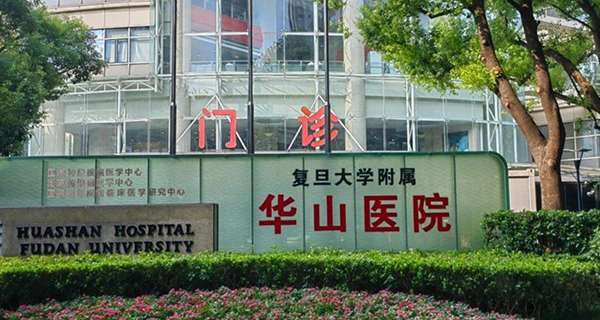
Huashan Hospital Affiliated to Fudan University

The hospital is responsible for the construction of three national-level medical centers: the National Medical Center for Neurological Diseases, the National Medical Center for Infectious Diseases, and the National Clinical Research Center for Geriatric Diseases. It is also the National Quality Control Center for Skin and Sexually Transmitted Diseases (under construction). It boasts 20 national key clinical specialties designated by the Ministry of Health, 10 national key disciplines designated by the Ministry of Education, and 2 national key laboratories. Its national examination scores of A++ rank it among the top tier nationwide, making it one of the most renowned and internationally-oriented medical, educational, and research centers in China.

RehabilitationDermatologyNeurologyInternal MedicineRare & Complex DiseasesOrgan TransplantOrthopedics
Request Hospital Matching

Hospital Introduction

1. Historical Origins and Spiritual Inheritance

Huashan Hospital, affiliated with Fudan University, was founded in 1907. Its predecessor was the Chinese Red Cross General Hospital and Medical School, a hospital run by Chinese people themselves. It was the first hospital in Shanghai established by Chinese people and trained the earliest batch of modern medical professionals in China. In 1992, the hospital was among the first batch of hospitals to pass the national Grade III Class A hospital evaluation. It is a hospital affiliated with the National Health Commission, Fudan University, and the Chinese Red Cross, and is one of the most renowned and internationally-oriented medical, educational, and research centers in China. Since its establishment in 1907, the hospital has always upheld the Red Cross spirit of humanity, fraternity, and dedication, producing many renowned figures such as Shi Yuquan, Zhou Liangfu, Dai Ziying, Weng Xinhua, Zhang Wenhong, and Gu Yudong.

2. Overall Scale and Hardware Capabilities

The hospital has 3,142 approved beds and 450 research beds, 44 clinical and medical technology departments, and more than 6,000 employees, over 80% of whom are medical professionals, including more than 800 senior experts. It has multiple campuses, including the main hospital, Pudong, Hongqiao, and Baoshan campuses, equipped with world-class facilities such as 3.0T intraoperative MRI, hybrid operating rooms, intraoperative mobile CT, Gamma Knife, CyberKnife, TMS-EEG, and fNIRs.

3. National Ranking and Authoritative Certification

The hospital is responsible for the construction of three national-level medical centers: the National Medical Center for Neurological Diseases, the National Medical Center for Infectious Diseases, and the National Clinical Research Center for Geriatric Diseases. It is also the National Quality Control Center for Skin and Sexually Transmitted Diseases (under construction). It boasts 20 national key clinical specialties designated by the Ministry of Health, 10 national key disciplines designated by the Ministry of Education, and 2 national key laboratories. Its national examination scores of A++ rank it among the top tier nationwide, making it one of the most renowned and internationally-oriented medical, educational, and research centers in China.

4. Core Business Data

In recent years, the hospital has averaged over 6 million outpatient and emergency visits annually, with nearly 200,000 discharged patients and over 100,000 surgeries. The hand surgery team pioneered a technique for treating upper limb hemiplegia following central nervous system injury using contralateral cervical nerve transfer, published in the *New England Journal of Medicine*, and awarded the first prize of the National Science and Technology Progress Award in 2024. The dermatology department sees over 1.8 million outpatient and emergency visits annually, ranking first in the world for single-department outpatient volume.

5. MDT Multidisciplinary Collaboration System

The hospital has established multidisciplinary wards such as cerebrovascular disease fusion ward and pituitary tumor fusion ward in its Hongqiao campus and other locations. It has also established a trauma center and formed a multidisciplinary comprehensive diagnosis and treatment team for trauma, stroke, chest pain, and other conditions. The hospital has deeply integrated neurology, neurosurgery, imaging, and nuclear medicine to build an integrated assessment system for complex central nervous system diseases. It also regularly offers MDT outpatient clinics for cerebrovascular diseases, cognitive impairment, myasthenia gravis, Parkinson's disease, and other conditions.

6. International and Foreign-Related Medical Treatment System

Established in 1989, Huashan Hospital International Medical Center is one of the earliest institutions in Shanghai and China to provide international medical services. It has provided over one million outpatient and emergency services to patients from more than 100 countries and regions, with overseas patients accounting for 50%. Currently, it sees approximately 40,000 outpatients annually, making it the medical institution in Shanghai that treats the most foreign inpatients. The hospital was the first in Shanghai to provide medical services to foreigners and is a designated medical institution for consulates of 10 countries. It has undertaken medical support tasks for major events such as the China International Import Expo, the World Expo, the Olympic Games, and the APEC meeting. It has also established friendly cooperative relationships with institutions such as Harvard Medical School, Massachusetts General Hospital, and the Munich Right Bank Hospital.

Key Departments

Explore the Clinical Focus and Capabilities of This Hospital's Key Departments

Select a department to view its full profile.

Department Profile

Neurology

04580866


It is a core department of the National Center for Neurological Diseases, a National Key Clinical Specialty, and a National Key Discipline of the Ministry of Education; its neurology department is ranked among the top in the country according to Fudan University's Specialty Reputation List; it is a national referral center for neuroimmunological diseases, motor disorders, cognitive impairment, and cerebrovascular diseases; and it is comparable to the National Neurological Hospital in London, UK, and the neurology department of the Mayo Clinic in the United States.


Historical Origins and Spiritual Inheritance:


Founded in 1950 by Professor Zhang Yuanchang, the founder of neurology in my country, it is one of the earliest neurology departments established in the country. Professor Lü Chuanzhen led the team to lay the foundation for the neuroimmunological disease discipline and inherited the Huashan Neurology spirit of "identifying difficult cases, emphasizing precision, and protecting nerve function". It has seven sub-specialties: cerebrovascular diseases, neuroimmunological myopathy, motor disorders, cognitive disorders, epilepsy and sleep disorders, and neurogenetics, and is equipped with a neurology research institute.


Core business operational efficiency:


The hospital has a total of 269 beds across multiple campuses; it sees 350,000 to 400,000 outpatients annually and discharges approximately 20,000 patients annually; it possesses platforms for neuroelectrophysiology, neuromolecular imaging, and cerebrospinal fluid biomarker testing; it offers outpatient services for nearly 20 neurological diseases; it routinely offers multidisciplinary team (MDT) services for cerebrovascular diseases, cognitive impairment, myasthenia gravis, and Parkinson's disease; and it receives referrals from across the country for encephalitis of unknown cause, refractory myasthenia gravis, hereditary neuromuscular diseases, Alzheimer's disease, and complex cerebral small vessel disease.


Core strengths:


One of the most comprehensive neurology departments in the country in terms of subspecialty system; possessing a complete technology chain including **precision immunotherapy for neuroimmunology, molecular imaging + DBS multidisciplinary program control for Parkinson's disease, early diagnosis of Alzheimer's disease using biomarkers, integrated intravenous thrombolysis and interventional thrombectomy for acute stroke, and gene diagnosis of hereditary neurological diseases**; leading the country in the scale of specimen banks for myasthenia gravis and neuromuscular diseases; deep integration of neurology, surgery, imaging, and nuclear medicine to construct an integrated assessment system for complex central nervous system diseases.


Discipline Positioning and Global Benchmarking:


A national-level center for the diagnosis, treatment, quality control, talent training, and translational medicine of complex neurological diseases; benchmarked against the National Institution for Neurological Disorders in London; and compared to overseas centers that emphasize basic neurobiology, Huashan Neurology highlights standardized diagnosis and treatment of myasthenia gravis/autoimmune encephalitis in the Chinese population, a national collaborative management system for Parkinson's disease, a series of studies on cerebral small vessel disease, and localization verification of Alzheimer's disease biomarkers.

Next Step

Is this hospital right for you?

Submit diagnosis, treatment history, and goals; hospitals and specialists recommend a formal case assessment.

Contact our service team