Renji Hospital Affiliated to Shanghai Jiao Tong University School of Medicine ✓ Certified partner hospital

Shanghai · Partner Hospital

Renji Hospital Affiliated to Shanghai Jiao Tong University School of Medicine

Renji Hospital boasts 13 national key clinical specialties (Gastroenterology, Obstetrics, Cardiology, Neurosurgery, General Surgery, Urology, Nephrology, Imaging Medicine, Rheumatology, Allergy, Transplantation, and Critical Care Medicine), and houses the National Key Laboratory of Oncology, the Key Laboratory of Anesthesiology of the Ministry of Education, and the Key Laboratory of Gastroenterology of the National Health Commission. The hospital ranks among the top in China for several specialties in the Fudan University Hospital Rankings, with its gastroenterology program consistently ranking first in the country for many years. It is also a co-construction unit of the National Regional Medical Center for Digestive Diseases.

GastroenterologyUrologyOrgan TransplantObstetrics & GynecologyInternal Medicine
Request Hospital Matching

Hospital Introduction

1. Historical Origins and Spiritual Inheritance

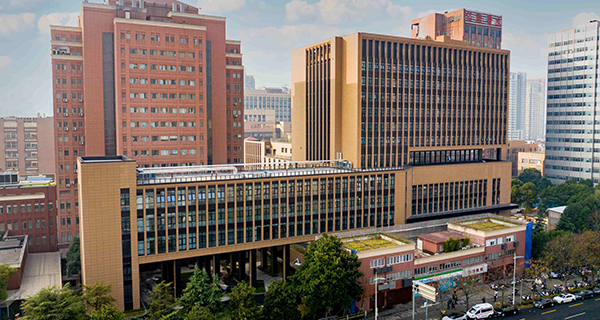
Renji Hospital, founded in 1844, was the first Western-style hospital established in Shanghai after the city opened to foreign trade. Its motto is "Benevolent Art to Benefit the World," and it adheres to the service principle of "Patients First, Quality Foremost." The hospital currently comprises four campuses (East, West, South, and North) and the Shanghai Cancer Institute. It is a comprehensive tertiary-level Grade A hospital with complete disciplines, integrating medical treatment, teaching, and research. It has been awarded the title of National Civilized Unit for four consecutive terms and has received an A grade in the annual performance evaluation of the Shanghai Shenkang Hospital Development Center for 18 consecutive years. The East Campus, located in the Lujiazui Financial and Trade Zone of Pudong, was completed and opened in October 1999. The West Campus, located at 145 Shandong Middle Road, Huangpu District, is the birthplace of Renji Hospital. The South Campus, located in Pujiang Town, Minhang District, was completed in December 2012 and fully integrated into the hospital in 2020. The North Campus, located at the intersection of Juye Road and Lingshan Road, was fully opened in July 2013. The Shanghai Cancer Institute merged with Renji in 2010 and completed its overall transfer in 2019.

2. Overall Scale and Hardware Capabilities

As of the end of 2025, the hospital had 4,886 full-time employees, including 776 experts with senior or associate senior professional titles, 201 doctoral supervisors, and 200 master's supervisors. The four campuses had a total of 2,750 approved beds and 54 clinical and medical technology departments. The hospital possesses advanced medical equipment such as dual-source photon counting CT, PET-CT, PET-MR, the da Vinci surgical robot, a stereotactic radiosurgery system, a tomotherapy system, a linear accelerator, a 320-slice 640-layer high-speed spiral CT, a hybrid operating room system, and a telemedicine teaching system.

3. National Ranking and Authoritative Certification

Renji Hospital boasts 13 national key clinical specialties (Gastroenterology, Obstetrics, Cardiology, Neurosurgery, General Surgery, Urology, Nephrology, Imaging Medicine, Rheumatology, Allergy, Transplantation, and Critical Care Medicine), and houses the National Key Laboratory of Oncology, the Key Laboratory of Anesthesiology of the Ministry of Education, and the Key Laboratory of Gastroenterology of the National Health Commission. The hospital ranks among the top in China for several specialties in the Fudan University Hospital Rankings, with its gastroenterology program consistently ranking first in the country for many years. It is also a co-construction unit of the National Regional Medical Center for Digestive Diseases.

4. Core Business Data

In 2025, the hospital completed 7.4584 million outpatient and emergency visits, discharged 268,200 patients, and performed 134,000 inpatient surgeries, with an average length of stay of 4.79 days. During the 14th Five-Year Plan period, the hospital received a total of 835 national-level projects, including 779 National Natural Science Foundation of China projects, added 64 national-level talents, and won several National Science and Technology Progress Awards and Chinese Medical Science and Technology Awards.

5. MDT Multidisciplinary Collaboration System

The hospital has a national and provincial major disease multidisciplinary collaborative diagnosis and treatment capacity building project (children and adults with end-stage liver disease). It has established mature multidisciplinary joint diagnosis and treatment clinics focusing on digestive system tumors, end-stage liver disease, urological tumors, rheumatic and immunological diseases, and reproductive medicine, and achieves regional collaboration by relying on close-knit medical alliances and telemedicine systems.

6. International and Foreign-Related Medical Treatment System

In 2014, the hospital established the Shanghai-Ottawa Joint Medical School, the first Sino-foreign cooperative education program in China to be officially approved by the Ministry of Education; in 2019, the Sino-French School of Surgery was established. The hospital has an international medical department/international outpatient service system and conducts training cooperation with institutions such as the Royal College of Surgeons of Edinburgh in the UK. It has also conducted medical aid missions to countries such as Morocco and Laos on multiple occasions and provided medical support for major events such as the China International Import Expo.

Key Departments

Explore the Clinical Focus and Capabilities of This Hospital's Key Departments

Select a department to view its full profile.

Department Profile

Digestive Rehabilitation

Renji Hospital does not have an independent "Digestive Rehabilitation Department". Instead, it is a subspecialty of digestive organ rehabilitation jointly established by the Department of Gastroenterology and the Department of Rehabilitation Medicine. Relying on the National Key Clinical Specialty Research Center for Gastroenterology and Organ Rehabilitation, it focuses on the full-cycle rehabilitation management of chronic digestive system diseases, postoperative gastrointestinal dysfunction, and brain-gut axis disorders. It is a domestic benchmark for digestive organ rehabilitation, comparable to the Munich Digestive Rehabilitation Center in Germany.


The Department of Digestive Rehabilitation at Renji Hospital is not an independent administrative department, but rather an interdisciplinary subspecialty that deeply integrates the strengths of both gastroenterology and rehabilitation medicine. The Department of Gastroenterology, founded in 1984 by Academician Jiang Shaoji and Professor Xiao Shudong, is home to the first digestive disease research institute in China. It has consistently ranked first in the Fudan University's Best Hospital Specialty Reputation Ranking for many years, with over 700,000 outpatient visits annually, ranking first in the country. The Department of Rehabilitation Medicine, established in 1953, has over 70 years of history. In 2023, it was officially designated as the "Visceral and Critical Care Rehabilitation Research Center" by the Shanghai Jiaotong University Taiping Rehabilitation Research Institute. It sees over 36,000 outpatient visits annually, ranking among the top rehabilitation departments in Shanghai.


Core business operational efficiency:


The Department of Gastroenterology has 166 inpatient beds and a 4,600-square-meter clinical endoscopy center, with over 700,000 outpatient visits and over 260,000 endoscopic procedures annually. The Department of Rehabilitation Medicine closely collaborates with clinical departments, providing early bedside rehabilitation and comprehensive rehabilitation treatment, covering critical care and organ rehabilitation, as well as perioperative respiratory function rehabilitation. The two departments work together through cross-disciplinary projects such as fatty liver exercise therapy, IBD full-cycle management, and psychosomatic treatment of functional gastrointestinal disorders.


Discipline Positioning and Core Strengths:


The core advantages can be summarized as a four-dimensional integration: "National No. 1 platform for gastroenterology × Designated organ rehabilitation center × National leader in gastrointestinal motility and psychosomatic diseases × Integration of exercise prescriptions and nutritional rehabilitation medicine and engineering." The Department of Gastroenterology has developed a series of distinctive clinical treatments in areas such as psychosomatic digestive system diseases, functional gastrointestinal disorders, inflammatory bowel disease, and chronic liver disease. The Department of Rehabilitation Medicine was designated as a "Research Center for Organ and Critical Care Rehabilitation" in 2023 and currently mainly focuses on critical care rehabilitation and organ rehabilitation. The core value of the intersection of these two departments lies in extending the management of digestive system diseases from "acute phase drug treatment" to the full cycle of "functional recovery and long-term quality of life improvement."

Next Step

Is this hospital right for you?

Submit diagnosis, treatment history, and goals; hospitals and specialists recommend a formal case assessment.

Contact our service team