Sun Yat-sen University Cancer Center ✓ Certified partner hospital

Guangzhou · Partner Hospital

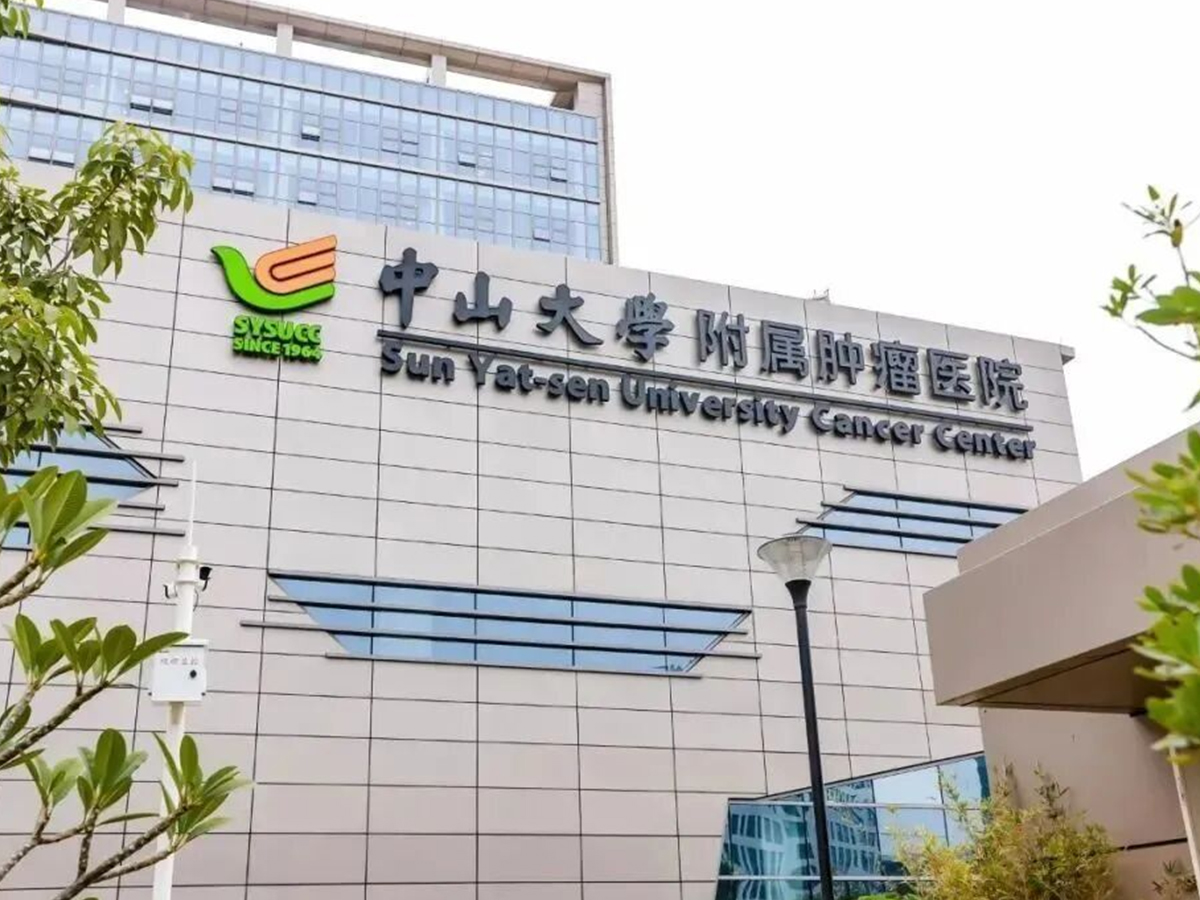
Sun Yat-sen University Cancer Center

The center's oncology department is a national key discipline, housing the National Key Laboratory for Prevention and Treatment of Malignant Tumors in South China, a key laboratory of the Ministry of Education, and the National Clinical Trial Research Center for New Drugs (Anti-tumor Drugs). It is also the supporting unit for the Guangdong Provincial Cancer Center and the Guangdong Provincial Esophageal Cancer Institute. Its scientific and technological influence ranked first in the 2023 China Hospital Science and Technology Value Ranking for Oncology, and its comprehensive strength in oncology as a specialty consistently ranks among the top two in China according to the Fudan University China Hospital Ranking. In the 2024 Nature Index ranking, it ranked fifth among global cancer centers. The center boasts 3 academicians of the Chinese Academy of Sciences, 3 academicians of the Chinese Academy of Engineering, and 47 national-level talents.

Oncology
Request Hospital Matching

Hospital Introduction

1. Historical Origins and Spiritual Inheritance

Sun Yat-sen University Cancer Center (Sun Yat-sen University Cancer Hospital, Sun Yat-sen University Cancer Institute), established in March 1964, is one of the four earliest cancer hospitals established in New China. Inheriting the cultural genes of "honesty, friendship, dedication, and innovation," the center has fostered a culture of loving the hospital like home, unity, and pioneering spirit. It has repeatedly won the title of Best Employer among Chinese Medical Institutions and plays a leading role in cancer prevention and control work nationwide, especially in South China and Hong Kong, Macao, and Taiwan.

2. Overall Scale and Hardware Capabilities

The center currently has two campuses, Yuexiu and Huangpu, with a total of 2,245 beds (1,571 in Yuexiu and 674 in Huangpu). The Yuexiu campus has a building area of 180,000 square meters, and the Huangpu campus has a total building area of 104,000 square meters. The center boasts a top-tier radiotherapy center in Asia, equipped with 15 linear accelerators (including an MRI-guided linear accelerator), a cyclotron accelerator, and multiple surgical robots, enabling it to perform minimally invasive robotic surgeries in various specialties. The first phase of the Tianhe Cancer Medical Science Center, with a building area of 200,000 square meters and a planned capacity of 1,500 beds, is currently under construction.

3. National Ranking and Authoritative Certification

The center's oncology department is a national key discipline, housing the National Key Laboratory for Prevention and Treatment of Malignant Tumors in South China, a key laboratory of the Ministry of Education, and the National Clinical Trial Research Center for New Drugs (Anti-tumor Drugs). It is also the supporting unit for the Guangdong Provincial Cancer Center and the Guangdong Provincial Esophageal Cancer Institute. Its scientific and technological influence ranked first in the 2023 China Hospital Science and Technology Value Ranking for Oncology, and its comprehensive strength in oncology as a specialty consistently ranks among the top two in China according to the Fudan University China Hospital Ranking. In the 2024 Nature Index ranking, it ranked fifth among global cancer centers. The center boasts 3 academicians of the Chinese Academy of Sciences, 3 academicians of the Chinese Academy of Engineering, and 47 national-level talents.

4. Core Business Data

The center sees 2.558 million outpatient and emergency visits and 222,000 inpatient admissions annually, ranking among the top oncology hospitals in China in terms of medical workload. 20% to 30% of the patients treated at the center participate in clinical trials, and over 92 clinical research findings in the past five years have been adopted by global oncology standards and guidelines. It publishes the English-language academic journal *Cancer Communications*, with an impact factor of 24.9 (JCR 2024), ranking in Q1 of the JCR oncology classification and first among comprehensive oncology journals in Asia.

5. MDT Multidisciplinary Collaboration System

In 1998, the center pioneered the implementation of a chief expert responsibility system for single-disease oncology nationwide, organizing the formulation of multidisciplinary comprehensive treatment plans for major diseases to provide individualized and standardized multidisciplinary treatment services for cancer patients. Focusing on major cancer types such as nasopharyngeal carcinoma, liver cancer, esophageal cancer, lung cancer, and breast cancer, it has established mature MDT (multidisciplinary team) teams, deeply integrating surgery, internal medicine, radiotherapy, imaging, pathology, and molecular diagnostics to form a "single-disease, multidisciplinary, integrated" oncology treatment model.

6. International and Foreign-Related Medical Treatment System

The center has established a sister hospital relationship with the University of Texas MD Anderson Cancer Center, ranked number one in cancer specialties in the United States. Based on this long-term cooperation, the center was awarded the "International Science and Technology Cooperation Award of the People's Republic of China". The center has also established close cooperation with world-leading cancer prevention and research institutions such as the Karolinska Institute in Sweden, the University of Warwick in the United Kingdom, the Royal College of Surgeons of Australia, and Erasmus Medical Center in the Netherlands, building a high-level international partnership network.

Key Departments

Explore the Clinical Focus and Capabilities of This Hospital's Key Departments

Select a department to view its full profile.

Department Profile

Medical Oncology

The Department of Internal Medicine at Sun Yat-sen University Cancer Center was originally established as the "Chemotherapy Professional Group" in 1965 and formally became a department in 1972. It is one of the earliest established and most academically strong medical, educational, and research bases for internal medicine oncology in my country, and is also a recognized leading unit in the field of oncology chemotherapy. The department is a national key discipline (oncology) and a national key clinical specialty, relying on the South China National Key Laboratory for Prevention and Treatment of Malignant Tumors and the National Clinical Research Center for New Antitumor Drugs. The discipline is internationally leading in precision immunotherapy for gastrointestinal tumors and chemotherapy and immunotherapy for nasopharyngeal carcinoma. It focuses on breakthroughs in targeted drug resistance in lung cancer and the development of bispecific antibody/ADC drugs. It also features precision diagnosis and treatment of lymphoma and CAR-T cell therapy. The discipline is positioned as a core source of new anti-tumor drug clinical research in China and an important output center for the standardization of oncology treatment.


Historical Origins and Spiritual Inheritance:


The Department of Internal Medicine was founded by Professor Guan Zhongzhen, a leading figure in my country's chemotherapy field, and other senior experts. It began as a "Chemotherapy Professional Group" in 1965, officially becoming a department in 1972. In 1983, it was designated by the Ministry of Health as one of the first clinical evaluation bases for new anti-cancer drugs in my country, and is the only Ministry of Health-affiliated clinical research base for new anti-tumor drugs in Guangdong Province. Through the efforts of several generations of academic leaders, including Guan Zhongzhen, Xu Ruihua, and Zhang Li, the department has evolved from a single chemotherapy model to a comprehensive treatment model encompassing chemotherapy, targeted therapy, immunotherapy, and cell therapy. It has accumulated over 60 years of rich experience in the clinical research and evaluation of anti-cancer drugs.


Core business operational efficiency:


The department has 6 wards and 26 attending professor positions across its Yuexiu and Huangpu campuses, with 285 beds, including one 12-bed day chemotherapy ward. There are currently 245 staff members, including 95 doctors, 117 nurses, 28 doctoral supervisors, and 30 master's supervisors. In 2025, the department expects 387,772 outpatient visits and 58,795 inpatient admissions. The department's inpatient clinical research enrollment rate is nearly 50%, and almost 50% of its anti-tumor drugs have received marketing approval through departmental clinical trials.


Discipline Positioning and Benchmarking:


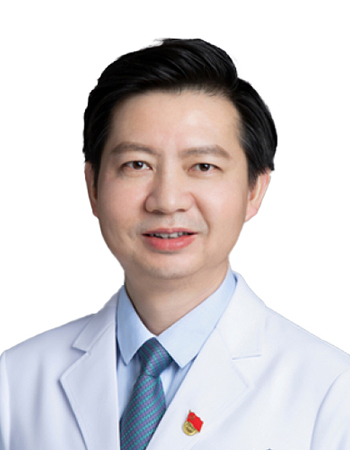
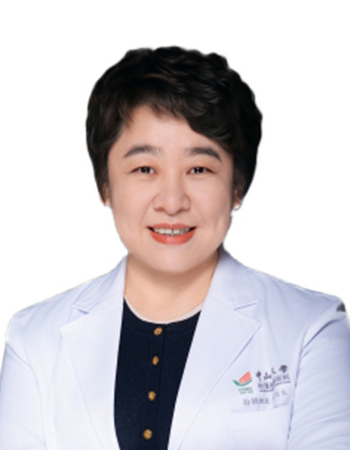
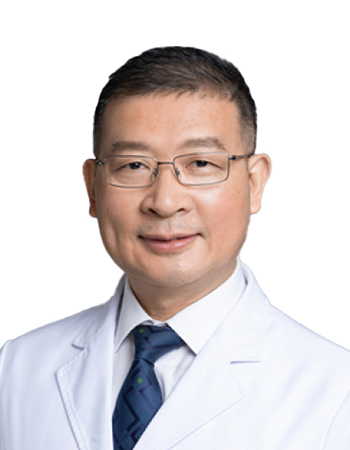
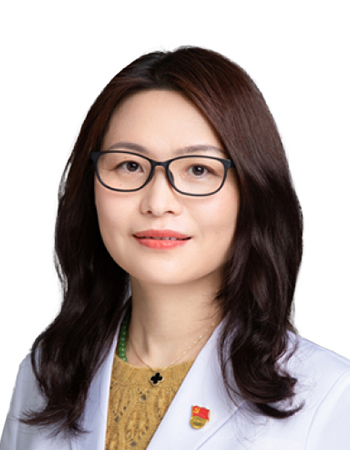
It is a national key discipline (oncology), a core clinical unit of the National Key Laboratory for Prevention and Treatment of Malignant Tumors in South China, and a leading unit for several national-level committees, including the Oncology Committee of the Chinese Anti-Cancer Association (CACA), the Colorectal Cancer Committee of the Chinese Society of Clinical Oncology (CSCO), the Clinical Research Expert Committee of CSCO, and the Immunotherapy Expert Committee of CSCO. Professor Xu Ruihua is an academician of the Chinese Academy of Engineering, Professor Zhang Li is a National Outstanding Physician and one of the Hundred Outstanding Physicians of Guangdong, Professor Wang Feng is a National Outstanding Young Scientist, and Professor Cai Qingqing is a Yangtze River Scholar. The discipline has continuously published groundbreaking research results in top international journals such as Lancet, JCO, JAMA, NEJM, Nature Medicine, and Cancer Cell.

Next Step

Is this hospital right for you?

Submit diagnosis, treatment history, and goals; hospitals and specialists recommend a formal case assessment.

Contact our service team